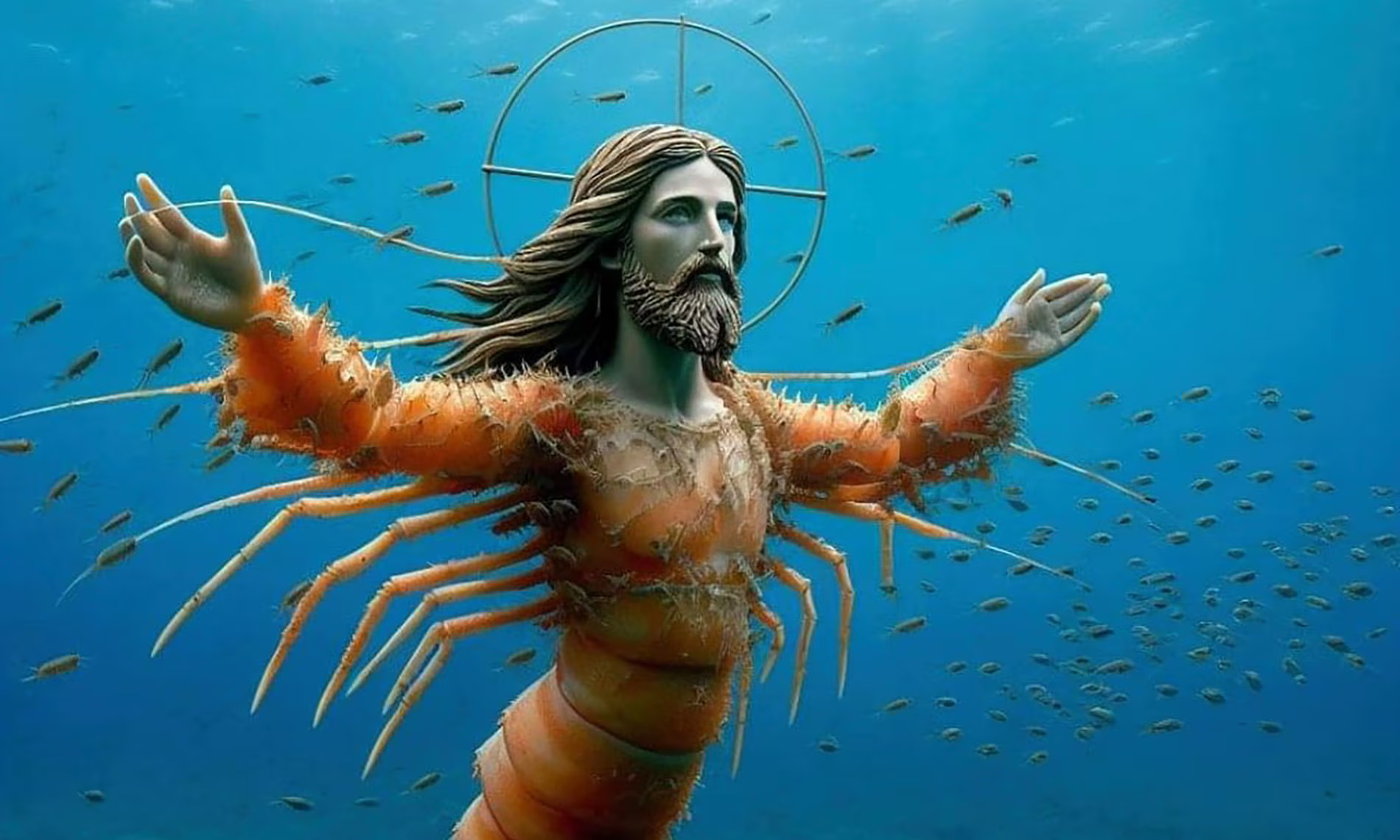
AI-generated content now makes up about half of new web articles — 49.9% in Q1 2026, after briefly overtaking human output in Q4 2025 and plateauing near parity (Graphite/Copyleaks, 2026). "Slop" became Merriam-Webster's word of the year for 2025. The web is now half-machine, and platforms are spending real money fighting the tide.
The flood is uneven. LinkedIn long-form posts read as 53.7% likely AI, Reddit samples land at 14.7%, and YouTube Shorts surface AI content in 21% of recommendations to a fresh viewer (Originality.ai, 2026; Kapwing, 2026). Every platform is now a content arms race between generators and detectors.
How did AI slop take over so fast?
The economics are brutal: generating content costs near $0 and scales infinitely, while detection costs money and ships late. Ad revenue flows to whatever gets views, so incentives rewarded volume over quality — until platforms started taxing it. AI content hit 49.9% of new articles in Q1 2026 (Graphite/Copyleaks), with LinkedIn at 53.7% AI (Originality.ai).
| Platform | AI share | Source |
|---|---|---|
| New web articles | ~50% | Graphite/Copyleaks 2026 |
| LinkedIn long-form posts | 53.7% | Originality.ai 2026 |
| YouTube Shorts recommendations | 21% | Kapwing 2026 |
| Reddit posts (sample) | 14.7% | Originality.ai 2026 |
| TikTok videos with AI element | 52% | TikTok/Storrito 2026 |
| Automated web traffic | 51% | Imperva 2025 |
| Platform | What is penalized | Reach impact | Monetization impact | Labeling required | Detection claim |
|---|---|---|---|---|---|
| Generic AI posts, engagement bait | Yes — suppressed to 1st-degree connections | No direct impact | No | 94% accuracy claimed (no FPR published) | |
| YouTube | Mass-produced templated AI content | No confirmed reach penalty | Yes — YPP eligibility requires originality | Yes (realistic AI) | Not published |
| TikTok | Undisclosed realistic AI content | No — labels do not affect engagement | No — labeled AI content eligible | Yes (mandatory for realistic AI) | 35–45% auto-detection rate |
| Meta (FB/IG) | Unoriginal/reposted behavior, spam | Indirect — aggregator accounts lose recommendations | No direct AI penalty | Yes ("AI info" label) | Not published |
| Substack | Not explicitly penalized | No confirmed reach penalty | No direct impact | Yes (Pangram detector for writers/readers) | Not published |
| Google Search | Scaled content abuse, low-quality AI | Yes — demoted in rankings | N/A | No | S-CTS + S-BERT (cluster + semantic) |
That table is the map of the problem. The highest AI shares sit where content is cheap to produce and hard to verify — professional social feeds, video recommendations, and the open web itself. The lowest sits where communities moderate fiercely, like Reddit.
How are platforms fighting back?
Google's March 2024 core update cut low-quality results by 45% and demoted "scaled content abuse." YouTube requires AI disclosure and labels; Meta restricts monetization of repetitive AI. TikTok labeled 1.3B+ videos with C2PA but auto-detection catches only 35–45%. LinkedIn suppresses generic AI reach to 1st-degree connections (94% detection claimed). Google Search uses S-CTS + S-BERT to demote scaled content at the cluster level.
Does labeling AI content hurt reach? It depends on the platform. LinkedIn suppresses reach for generic AI content. YouTube ties monetization to originality, not reach. TikTok says proper labeling does not affect engagement. Meta demotes unoriginal behavior, not AI origin itself.
AI slop is not a technology problem. It is an incentives problem — and incentives scale faster than moderation.
— Luca Moretti
How accurate are AI detection tools in 2026?
Detection accuracy has improved dramatically, but the picture is more nuanced than headline numbers suggest. Originality.ai reports 99%+ accuracy on flagship models like GPT-5, Claude, and Gemini, with false positive rates between 0.5% and 1.5% (Originality.ai, 2026). Graphite's independent study found false positive rates under 2% across Pangram, Copyleaks, and GPTZero when testing 15,700 pre-ChatGPT articles (Graphite/Copyleaks, 2026).
The catch: humanizer tools degrade performance. Undetectable.ai, Phrasly, and similar bypass services reduce detection accuracy to 80–97% depending on the detector (Originality.ai, 2026). Non-native English content and paraphrased text also trigger more false positives. The FTC fined a company called Workado in 2025 for claiming 98% detection accuracy when independent testing showed only 53% on general-purpose content — a reminder that not all detector claims hold up (FTC, 2025).
| Detector | Overall accuracy | False positive rate | Best for |
|---|---|---|---|
| Originality.ai Lite 1.0.2 | 99.3% | 0.5% | Low false-positive environments |
| Originality.ai Turbo 3.0.2 | 98.3% | 1.5% | Aggressive recall against humanizers |
| GPTZero | 99.9% (article-level) | 1.4% | Quick article-level classification |
| Pangram | 98.2% | 1.8% | Proportion-based AI scoring |
| Copyleaks | 98.0% | 1.8% | Multi-language detection |
What still slips through?
Bad bots make up 37% of traffic; automated traffic hit 51% of all web requests (Imperva, 2025). NewsGuard found 3,000+ AI content farms across 16 languages. Detection tools claim 99% accuracy in benchmarks but degrade on paraphrased, mixed, and non-native content — creating a gap no single platform closes.
LinkedIn's 2026 study drove the point home: 81.2% of 5,000 long-form posts scanned in July were flagged as likely AI, prompting the platform to roll out a "Seems Like AI Slop" feedback option for users (Originality.ai, 2026). Meanwhile, 1 in 5 fitness guides on Pinterest turned out to be likely AI, and 37% of Canadian real estate listings showed the same pattern (Originality.ai, 2026).
What is C2PA and why does it matter?
C2PA (Coalition for Content Provenance and Authenticity) is a cryptographic standard that embeds tamper-evident metadata about content origin. TikTok has labeled over 1.3 billion videos with C2PA credentials since joining the CAI in May 2024. The standard is backed by Adobe, Microsoft, the BBC, and hundreds of other organizations — it's the closest thing the industry has to a universal provenance layer (CAI, 2026).
The problem is adoption. Most web content still lacks C2PA metadata, and many platforms strip it during re-upload or compression. Provenance works when content stays in a C2PA-aware ecosystem (like TikTok's labeling pipeline), but breaks the moment it's screenshotted, reshared, or reposted elsewhere. It's a necessary layer, not a silver bullet.
How can readers tell AI slop from real content?
Look for generic structure (problem-solution-CTA arc), repetitive phrasing, lack of specific examples or lived experience, and high-volume publishing with little variation. Red flags include no named author, no original data or firsthand reporting, and paragraphs that all land at the same length. Tools like Pangram (Substack) and Originality.ai offer detection, but false positives are common on paraphrased or mixed content.
- No named author or credentials — AI slop rarely attributes claims to a real person
- Generic problem-solution-CTA structure repeated across every article
- No original data, surveys, or firsthand experience
- High-volume publishing (dozens of posts per day from a single source)
- Paragraphs that all land at the same length with similar sentence patterns
What is the future of the open web?
The realistic path forward is C2PA provenance plus platform enforcement plus reader skepticism — not any single magic detector. Graphite's research shows AI content plateaued near 50% rather than surging toward 90%, partly because practitioners discovered that primarily AI-generated articles don't perform well in search results (Graphite/Copyleaks, 2026). That's a small victory for organic quality.
But the threat is real. If detection tools remain 99% accurate on clean AI output but drop to 80% on humanized content, bad actors will keep exploiting the gap. The FTC's crackdown on misleading detection claims adds another wrinkle: consumers can't always trust the tools meant to protect them (FTC, 2025).
The open web survives if three things hold: communities that moderate fiercely (Reddit's 14.7% AI share proves it works), provenance standards that gain real adoption (TikTok's 1.3B C2PA labels show momentum), and readers who learn to spot the difference. C2PA alone won't save us. Enforcement alone won't save us. Reader skepticism combined with both might.
Sources and further reading
- Graphite/Copyleaks: 50% of the web is AI-written
- Originality.ai: AI detection accuracy studies
- Content Authenticity Initiative: C2PA and Content Credentials
- NewsGuard AI content-farm tracker
- Google Search: Creating helpful, people-first content
- FTC: Workado AI detection accuracy enforcement
- Cloudflare: What is a bot?
- The Best AI Models of 2026, Ranked by Real Users
- AI Agents Hit the Payroll
- Digital Minimalism for People Who Actually Like Tech
- Why AI Chatbots Hallucinate
- Dead Internet Proof
- Open Source AI: Locally First
- The Great CS Exodus
Bottom line
The open web survives if three things hold: communities that moderate fiercely (Reddit's 14.7% AI share proves it works), provenance standards that gain real adoption (TikTok's 1.3B C2PA labels show momentum), and readers who learn to spot the difference. C2PA alone won't save us. Enforcement alone won't save us. Reader skepticism combined with both might.
What we still don't know
This is a fast-moving story. We update the post as new facts land — and we'll flag it when we do.
Enjoyed this? Pay it forward
A sharp story is worth passing on. Share it with the people who read tech like it matters.