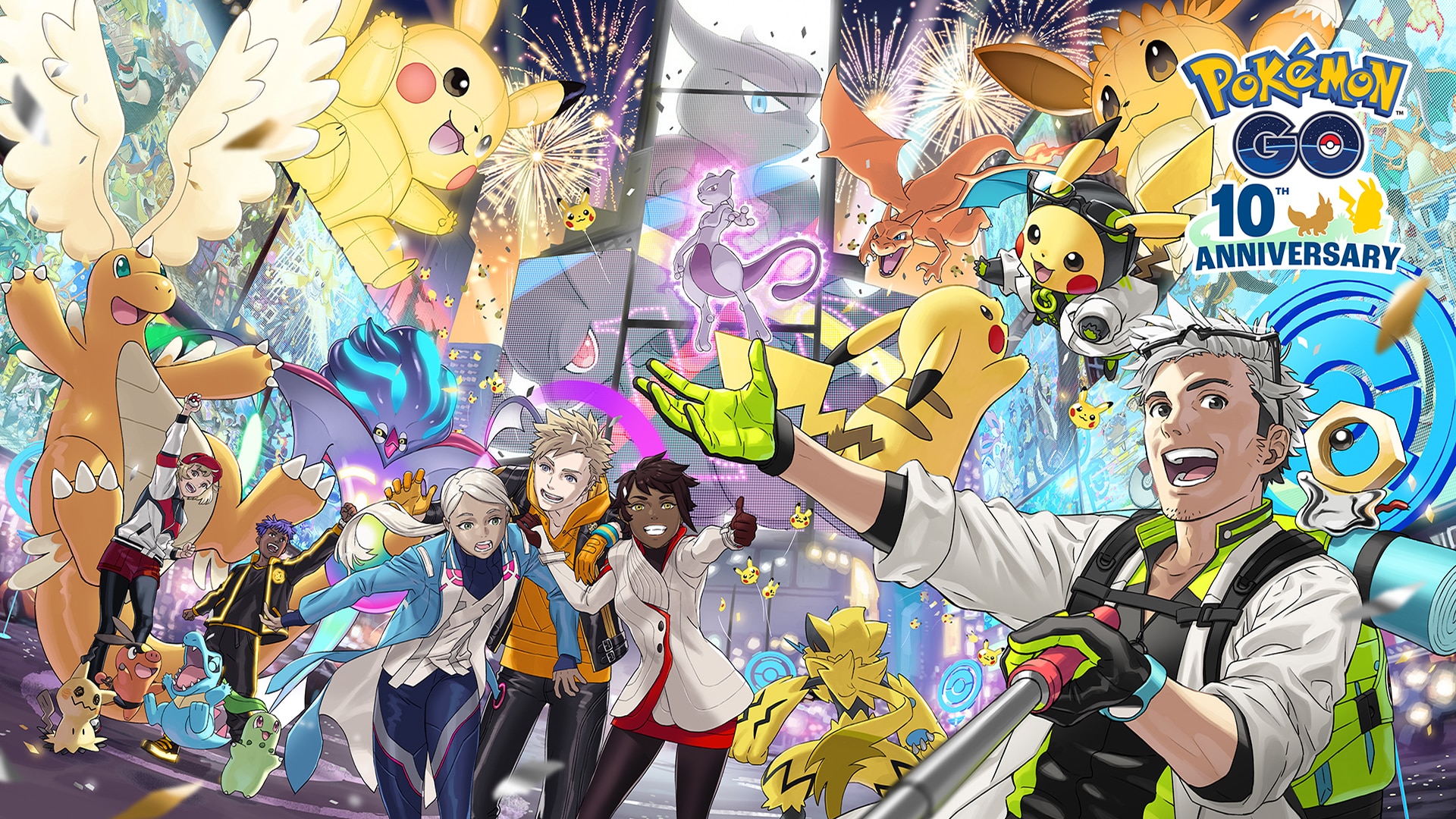
Pokémon GO shipped its official global release in July 2016, and a decade later it still stands as the most consequential mobile game ever made. The teaser dropped in 2015, the beta arrived in 2016, and the launch pulled people onto the streets in a way no other title has matched, because it put the game into the real world (Inquirer, 2026).
The mechanics that made it famous are exactly what kept it alive. Rather than a pure game you play on a couch, it pairs augmented reality, phone GPS, and physical geography to make walking the core loop. Ten years of events show that the formula has not aged: every fresh event is a reason to go outside again.
- 2015: first teaser trailer dropped on YouTube.
- 2016: beta tests followed by a July global release.
- 2017: first shinies, raid battles, and community days arrive.
- 2026: ten full years of community, trades, and PvP.
How did a phone app first get everyone outside?
The launch-week phenomenon was a once-in-mobile-history accident. Players walked streets with their phones out, rare Pokemon like Snorlax or Lapras triggered real crowds, and bystanders watch entire groups sprint. For many newcomers that milestone in augmented reality was the first time an AR ring existed in their pocket at all (Inquirer, 2026).
That unusual early peak almost killed it. A few months after launch, novelty faded, and the player count pulled back to a loyal core. The game would have followed every other AR flash-in-the-pan if the updates that followed had not arrived in time to give the community new reasons to stay.
What kept the first of those ten years alive?
The answer is layers, not one feature. Shiny hunting gave collectors something rare to chase; Raid Battles forced real-time grouping; and the friendship and trades systems, added later, made the game richer only with other people around. 2017 is the year the game turned from a novelty into a habit: the first shinies, Magikarp and Gyarados, arrived at the Water Festival.
How did the Pokémon community keep forming?
The game is community-shaped by design. Community Day events were scheduled monthly, raids and camps draw players to specific meeting points, and local communities grew everywhere there were stops. The 2022 Community Ambassador Program formalized what had grown organically, rewarding activity and inclusion across local communities worldwide.
Where did PvP and raids go from there?
Player-versus-player finally made the game competitive, closing the last feature promised in the original trailer. Raids scaled from ordinary battles to EX Raids, then to remote raiding during the lockdown era, and later to Dynamax and Gigantamax battles. None of that diluted the core walking loop — it layered new motivations on top of it.
Pokemon GO was, and still is, a huge part of my daily life. Ten years later, I may not remember every catch, but I remember every place.
— An original trainer, August 2026
How does Niantic keep the lights on after a decade?
The economics survived the hype curve, which is rarer than the record launch. Lifetime player spending on Pokémon GO is reported to have cleared $8 billion (Sensor Tower, 2025), driven less by a paywall than by the social event calendar: community days, raid passes, and the ticket-based events that turn a free AR game into a recurring revenue machine. Niantic's games division, Pokémon GO included, was sold to Scopely in March 2025 for a reported $3.5 billion, and the new owner keeps the same live-event playbook (Inquirer, 2026).
Is it still worth starting in the year of the decade?
For what the game offers, absolutely. Hundreds of species beyond the original 151, mega and super raids, and one of the most active global mobile communities. New players still get the original simple loop; veterans get layers of depth. The barrier is time and battery, not the cost.
What's the ten-year arc to remember?
Go from a 2015 teaser to 2026 and you get a rare object: a game that outgrew its launch. The key additions — shinies, raids, friendship systems, PvP — arrived at the exact moments the novelty was wearing thin, and every single one of them was social. That is the lesson other location games keep trying to copy (Inquirer, 2026).
When was Pokémon GO released?
Pokémon GO marked its global release in July 2016, after a 2015 teaser trailer appeared and a 2016 beta. Regional rollouts followed markets like the Philippines in August 2016.
Is Pokémon GO still worth playing in 2026?
Yes. The decade has brought hundreds of Pokémon, raids, trades, PvP, Dynamax and mega battles, none of which damages the original walking loop. New players benefit from a gentle intro, an active community, and a decade of content.
Who makes Pokémon GO?
Pokémon GO is developed by Niantic and published by The Pokémon Company. It is an AR mobile game that puts Pokémon into the real world.
What is a Community Ambassador?
The Community Ambassador program, formalized in 2022, supports local community organizers by giving them tools, flair, and a welcoming atmosphere for their most passionate events.
Bottom line: a decade of Pokémon GO proves the mobile game that lasts is the one that forces a combination of walking, gathering with other people, and continuous social events. The hype wave is long gone, but the game that made people leave the house turned what looked like a summer fad into a global, ten-year street-level pastime.
- Every major reveal from Xbox at Gamescom
- PlayStation Plus August lineup
- Digital ownership fears after the PS5 blackout
- Inquirer: ten years of playing Pokémon GO
- Nintendo keeps Pokémon at 30 years old, new pop-up
Bottom line
Bottom line: a decade of Pokémon GO proves the mobile game that lasts is the one that forces a combination of walking, gathering with other people, and continuous social events. The hype wave is long gone, but the game that made people leave the house turned what looked like a summer fad into a global, ten-year street-level pastime.
What we still don't know
This is a fast-moving story. We update the post as new facts land — and we'll flag it when we do.
Enjoyed this? Pay it forward
A sharp story is worth passing on. Share it with the people who read tech like it matters.