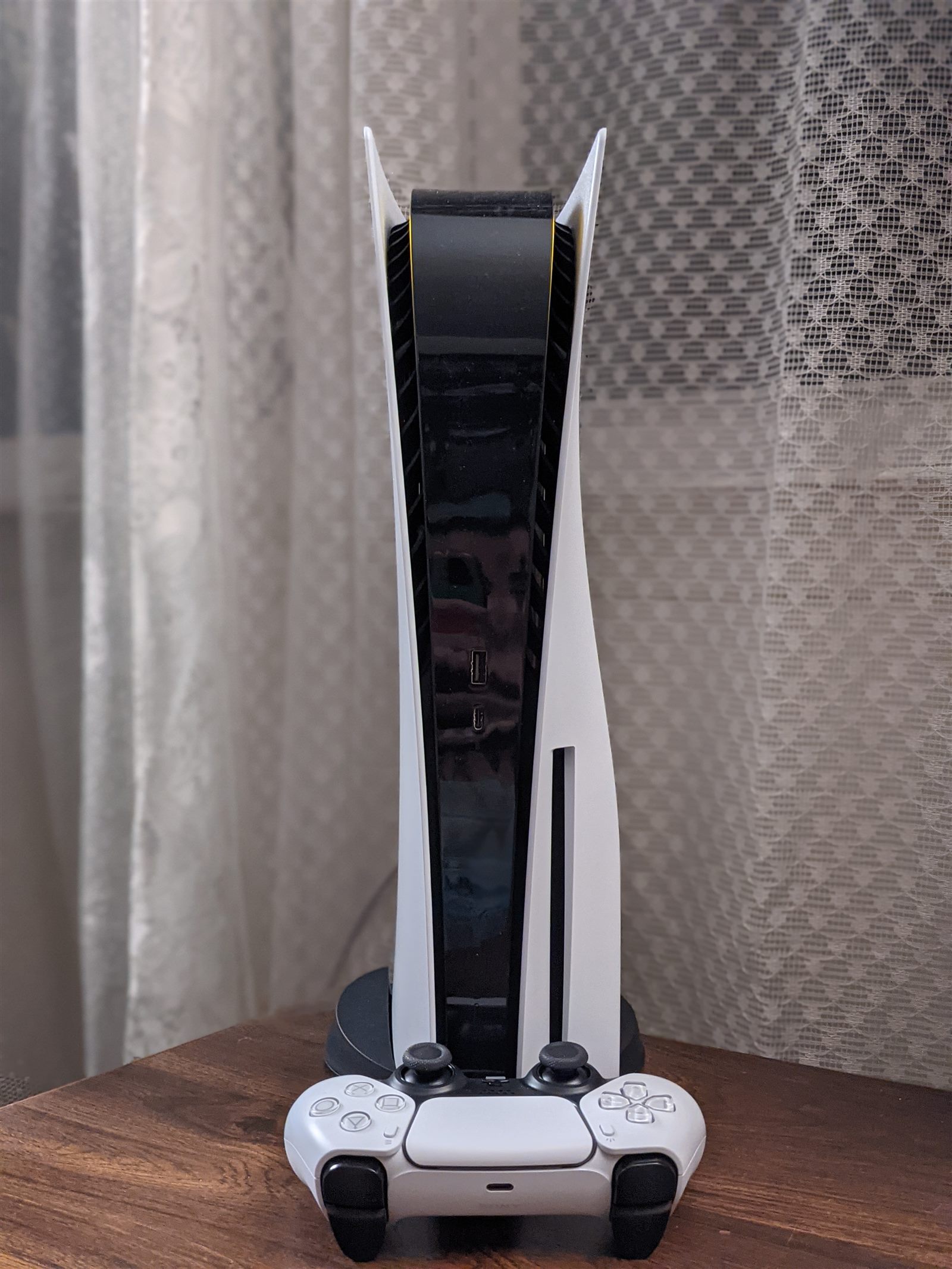
PlayStation fans are staging a seven-day blackout from August 23 to 30 in protest of Sony's plan to stop producing physical PlayStation discs in 2028. The 'Don't Kill the Disc' petition passed 345,000 verified signatures by July 27 (Change.org, 2026), and organizers with the preservation group Does It Play are asking players to log out, not play, and buy nothing on Sony platforms for the week (Push Square, 2026). The backlash has become one of the largest consumer protests in gaming history.
The trigger is a single announcement. On July 1, 2026, Sony said new PlayStation games released after January 2028 will ship digitally or as a box containing a download code, with no disc inside (PlayStation Blog, 2026). Days earlier, Grand Theft Auto VI confirmed it will launch with no disc at all. Together, these moves signal the end of physical media as PlayStation fans have known it for three decades.
Why did Sony end physical PlayStation discs?
Sony frames it as economics. The company told investors that the 'digitalization of content overall has been progressing' and called it the 'big factor' behind the decision (Kotaku, 2026). Physical media has become an unnecessary manufacturing and distribution cost, and Sony's own data shows the overwhelming majority of new games are already sold digitally. PlayStation reported about 125 million monthly active users as of March 2026, a huge installed base Sony is now monetising with pricier games and fewer discounts (The Escapist, 2026).
The financial logic is straightforward. Disc production, packaging, shipping, and retail cuts eat into margins. A digital-only ecosystem eliminates the second-hand market entirely, lets Sony control pricing without retailer competition, and removes the cost of manufacturing a format fewer and fewer people use. Only seven PlayStation games sold more than 100,000 physical copies in the US across all of 2026 (Tweaktown, 2026). That number makes the business case obvious to Sony, even if it enrages collectors.
What is the PSBlackout, and how does it work?
The protest runs Sunday, August 23 at 7pm local time through Sunday, August 30 at 7pm. Participants skip PlayStation Network logins, game sessions, and PlayStation Store purchases for the full week (Push Square, 2026). Organizers deliberately picked a window with no major first-party release to minimize harm to developers and publishers. The blackout targets Sony's two most valuable metrics simultaneously: active user counts and digital revenue.
| Detail | Value |
|---|---|
| Start | August 23, 7pm local |
| End | August 30, 7pm local |
| Length | 7 days |
| Scope | All Sony platforms + PS Store |
| Organizer | Does It Play |
Does It Play is a game preservation and consumer rights group that has gained prominence for advocating against anti-consumer practices in the industry. Their statement on X laid out a broader grievances list beyond just discs, citing studio closures like Bluepoint Games, a 'misguided live-service strategy,' canceled fan events, and the neglect of PSVR2 (Kotaku, 2026). The disc decision, they argue, is simply the last straw for a community that already feels abandoned. The group chose the blackout window carefully to avoid harming developers while still sending a clear financial and engagement signal to Sony's leadership.
Why are fans so angry about the disc decision?
The anger is about ownership, not convenience. At E3 2013 Sony mocked Microsoft with an ad promising you could trade, sell, or 'keep it forever' the games you buy. That promise now rings hollow. A digital license can be revoked at any time, and Sony has already demonstrated this. In June 2026, Sony deleted 551 purchased movies from PS5 libraries after a licensing deal with StudioCanal expired, including Terminator 2, Total Recall, and Rambo: First Blood (Kotaku, 2026). No refunds were offered.
Sony's own spokesperson confirmed to Game File that 'all digital content, including games, movies, and music, players are purchasing a personal license for non-commercial use' (Game File, 2026). That single sentence undermines the entire concept of digital ownership. You are not buying a game. You are renting access that can be revoked whenever a licensing agreement changes or a storefront shuts down.
Sony wants to abandon fans? Let's give them a small taste of their own medicine.
— Does It Play
Did the Xbox outage prove you do not own your games?
Days before the blackout was announced, a roughly 20-hour Xbox outage blocked players from launching games, including some disc-based titles (The Verge, 2026). The outage began Sunday evening and prevented people from logging in, launching apps, or accessing the Xbox store. Xbox technology chief Scott Van Vliet said disc-based entitlement checks should not prevent offline play and that a fix is coming, but the incident proved physical media still depends on a server approving it.
The outage also coincided with Microsoft testing a new disc-to-digital feature internally, which would grant digital entitlements for physical discs (The Verge, 2026). That feature acknowledges a hard truth: even disc games already require server-side authentication. The only difference between a disc and a download is the delivery method. Both ultimately depend on a company's servers deciding you deserve to play.
What does this mean for game preservation?
Game preservation groups have long warned that digital-only ecosystems create single points of failure. When a storefront shuts down, every game sold exclusively through it becomes inaccessible. Sony already closed the PS3 and Vita stores, leaving hundreds of digital-only titles permanently unavailable. The EU has recognized this problem: a 2025 regulation now requires publishers to offer offline access for games they sell, though enforcement remains inconsistent (Eurogamer, 2025). Nintendo's recent Switch 2 launch introduced game key cards, which at least allow sharing and resale, unlike download codes.
Without physical discs, there is no backup. A hard drive failure, an account ban, or a server shutdown can erase a library that took years and thousands of dollars to build. Preservationists argue that physical media serves as a permanent, platform-independent archive. A PS2 disc still works in a PS2. A digital purchase from 2010 might not work on anything anymore.
Will a week-long blackout actually change anything?
Skeptics note that Sony has already confirmed it will not reverse the decision, and its CFO repeated that position after the backlash during the company's July 31 earnings call (Kotaku, 2026). 'We put in a lot of thought and time, and we cautiously considered this, and we came to this conclusion, and we're going to cautiously move this forward,' CFO Lin Tao said through an interpreter. During an earlier controversy, players rushed to buy classic Call of Duty games so hard that they crashed the PlayStation Store (ComicBook, 2026).
Still, the numbers are unusual. The announcement post drew 1.5 million views within days (Dot Esports, 2026), and the petition passed 345,000 signatures before the blackout was even scheduled. Sony has so far refused to engage on social media, which has only sharpened the campaign. The question is whether a company generating billions in quarterly profit will notice a one-week dip in active user metrics.
The bottom line
Sony ends physical discs for new games in 2028, fans organize a week-long August blackout, and the petition has passed 345,000 signatures. The Xbox outage proved that even disc games depend on servers, and Sony deleted 551 purchased movies to remind everyone that digital ownership is an illusion. Whether the blackout moves Sony or not, the fight has already reframed the debate: players are asking not whether digital is convenient, but whether they actually own what they pay for. The next twelve months will determine whether physical media survives on PlayStation at all, or whether the industry's all-digital future arrives faster than anyone expected.
Sources and further reading
- PlayStation Blog — Physical disc production ending in January 2028
- Kotaku — Sony not budging on ending PlayStation discs
- Kotaku — PlayStation fans mount blackout week
- The Verge — Xbox outage blocked disc games
- Kotaku — PlayStation deleting 551 movies from customer accounts
- Change.org — Don't Kill the Disc petition
- Eurogamer — PSBlackout physical media protest
- The Verge — Xbox disc-to-digital feature testing
- Memory Crisis 2026: Why RAM and SSD Prices Doubled
- Game Price Backlash: The $70 Game War
- Digital Minimalism for People Who Actually Like Tech
- GTA 6 Digital-Only Numbers: What They Tell Us
- Disc-pocalypse: Retail's Physical Media Collapse
- EU Game Preservation Law: What It Means
Bottom line
Sony ends physical discs for new games in 2028, fans organize a week-long August blackout, and the petition has passed 345,000 signatures. The Xbox outage proved that even disc games depend on servers, and Sony deleted 551 purchased movies to remind everyone that digital ownership is an illusion. Whether the blackout moves Sony or not, the fight has already reframed the debate: players are asking not whether digital is convenient, but whether they actually own what they pay for. The next twelve months will determine whether physical media survives on PlayStation at all, or whether the industry's all-digital future arrives faster than anyone expected.
What we still don't know
This is a fast-moving story. We update the post as new facts land — and we'll flag it when we do.
Enjoyed this? Pay it forward
A sharp story is worth passing on. Share it with the people who read tech like it matters.