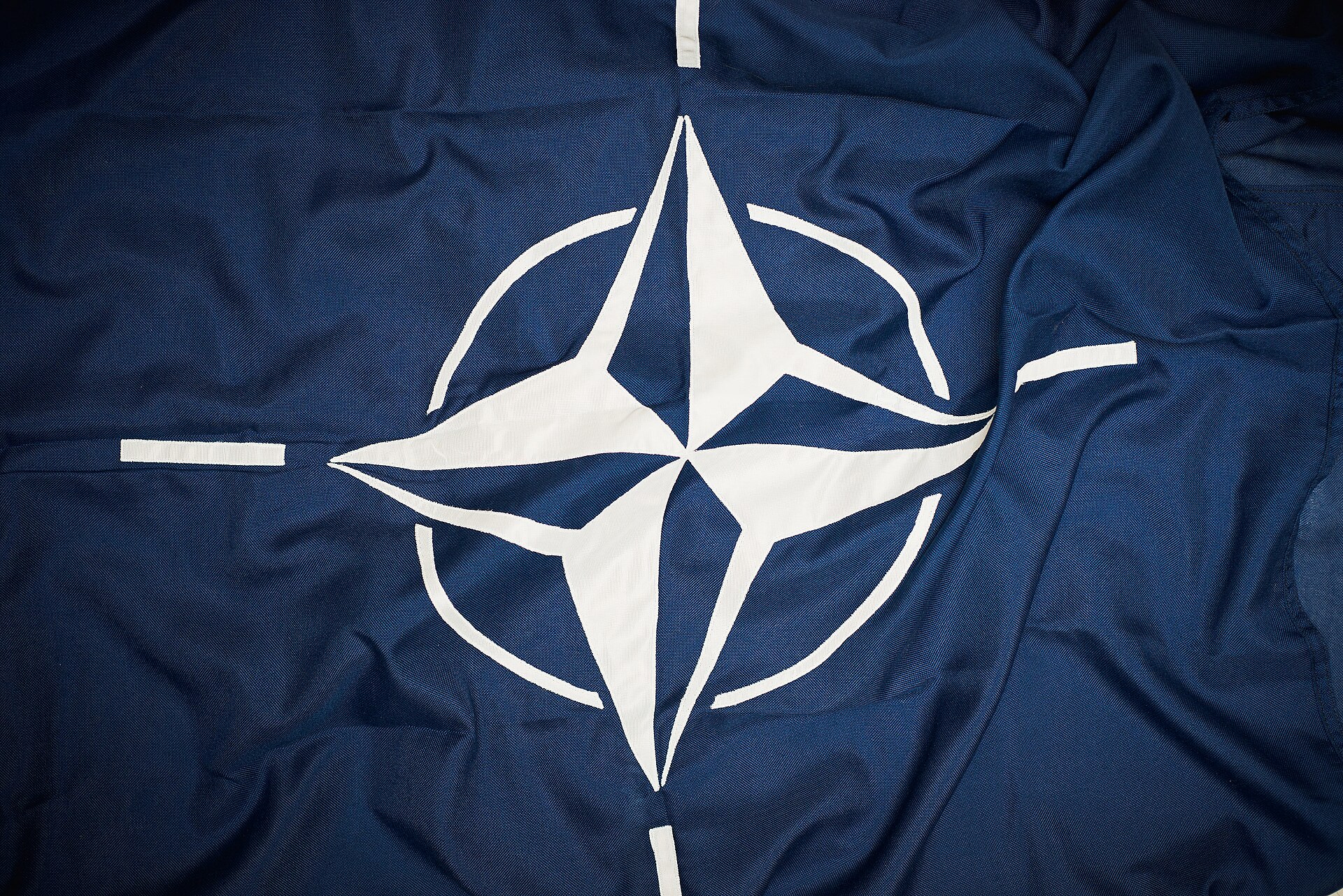
Article 5 of the North Atlantic Treaty is the single most important sentence in European security. It commits every member to treat an armed attack on any one member as an armed attack on all, and it has been invoked exactly once in the 77 years since the treaty was signed, after 9/11. The question now on every strategist's desk is what it would actually take, and what it would actually do, if Russia ever put it to the test.
The text of the guarantee
The Parties agree that an armed attack against one or more of them in Europe or North America shall be considered an attack against them all. - Article 5, Washington Treaty (1949)
The full text continues with the pledge that each member, exercising self-defense under Article 51 of the UN Charter, will assist the attacked party by taking forthwith, individually and in concert with the other parties, such action as it deems necessary, including the use of armed force, to restore and maintain the security of the North Atlantic area (NATO, 2025).
The key phrase is as it deems necessary. The treaty obliges a response, but it deliberately lets each capital define the scale and form of its own contribution. The US insisted on that wording during the drafting in 1948-49 so that Article 5 could not automatically drag Washington into a war through treaty obligation alone. An ally can answer with troops, with arms, with logistics or with political support; the commitment is to act, not to a specific act (NATO, 2025).
The one time it was used: 9/11
Article 5 has been triggered exactly once. On 12 September 2001, the North Atlantic Council agreed that the attacks on the United States could be regarded as covered by Article 5 if they were determined to be directed from abroad. Two weeks later, on 2 October 2001, after US Ambassador Frank Taylor briefed the Council on the investigation, the allies confirmed the invocation (NATO, 2001).
The response that followed shows what the clause actually produces. NATO launched Operation Eagle Assist, seven AWACS radar aircraft patrolling American skies with 830 crew from 13 allied nations, and Operation Active Endeavour, surveillance patrols in the Mediterranean. It was real military support, but it was not a coalition of armies marching together. The US fought in Afghanistan largely outside NATO's collective machinery (NATO, 2025).
What counts as an armed attack
NATO's own guidance is careful: Article 5 applies to an armed attack, not to every act of aggression below that threshold, and each case is assessed on its facts in the North Atlantic Council. The treaty says the triggering event must be an armed attack on a member's territory in Europe or North America, directed from abroad. At recent summits, allies have clarified that attacks to, from or within space may count, and that significant cyber attacks and other hybrid attacks may be considered an armed attack (NATO, 2025).
That last clarification matters because so much of the pressure on the alliance sits below the invasion line: drone incursions, cable sabotage, cyber campaigns and shadow-fleet activity. None of those alone looks like the attack the treaty's authors imagined, and allies have spent years arguing about exactly where the line runs. That ambiguity is itself part of Russia's strategy, which is to keep NATO guessing about what would actually be treated as war.
Why the Baltic states are the flashpoint
Estonia, Latvia and Lithuania are the sharpest edge of the Article 5 question. They are members, they border Russia or Belarus, and US intelligence now assesses that Russian President Vladimir Putin could try to test NATO's resolve with a limited attack on an allied country within the next few years, most likely in the Baltics or Poland, according to sources briefed on the reports and reported by the Wall Street Journal, CNN and CBS News in August 2026 (WSJ, CNN, CBS, 2026).
The intelligence describes a range of scenarios, from cyberattack to a small-scale land incursion intended to challenge NATO unity without necessarily crossing the threshold for an allied response. The timeframe runs from this fall to 2029. The assessments mark a shift: for years, the US judged Putin unlikely to provoke NATO while he was still fighting in Ukraine; that judgment has changed as the war grinds on and Moscow looks for leverage (WSJ, 2026).
The four steps that would actually trigger it
- The North Atlantic Council convenes, most members represented in Brussels, within hours.
- The Council assesses whether the attack is armed and directed from abroad.
- The 32 members then decide whether to declare that Article 5 has been triggered.
- If invoked, each member picks its own response, from intelligence and logistics to direct military force.
That last step is where the treaty's famous flexibility cuts both ways. Article 5 guarantees a response, but it does not guarantee a war. The legal obligation is one of action as each member deems necessary, not a shared command to fight. That is also why Article 3, the national self-defense duty, keeps getting upgraded: the guarantee is only credible if every member is strong enough to help secure itself while the alliance mobilizes.
The gray zone: hybrid, drones and cables
The harder test is not an invasion but the zone beneath it. Russian drones have repeatedly crossed into Romanian airspace, a Russian missile landed in Poland last month, and at least 13 cables under the Baltic Sea were damaged between fall 2023 and early 2025, according to reporting and NATO statements cited by CBS News and Newsweek (CBS, 2026; Newsweek, 2026). These incidents stop short of an armed attack but keep NATO's threshold constantly under pressure.
NATO Secretary General Mark Rutte has warned that Russia is expanding its use of hybrid tactics and could be ready to use military force against the alliance within five years. The alliance's answer is a combination of forward presence, enhanced readiness and increased defense spending. The pattern matters because a gray-zone campaign is exactly how a power probes a treaty guarantee without triggering it: every incident tests whether the response mechanism still works.
What a real Article 5 confrontation could look like
If Russia ever directed an armed attack at a NATO member, the sequence would move fast. The North Atlantic Council would convene within hours; allied defense plans, which have been rebuilt for high-end war since 2014 and again after 2022, would move from the shelf to execution. NATO's forward battlegroups in the Baltic states and Poland would be reinforced, and the pooled air, naval and intelligence resources of the alliance would converge on the front.
The deterrent logic is deliberately visible. NATO now holds regular exercises rehearsing the Article 5 scenario, including war games that simulate a Russian push into the Baltic states, because the goal is to make the cost of escalation exceed any partial victory. The alliance is also preparing the response it has historically been worst at: what to do when the attack is deliberately ambiguous enough that invoking Article 5 itself becomes the contested question.
Key takeaways
- Article 5 is a 1949 collective-defense clause: an armed attack on one is an attack on all.
- It has been invoked once, in 2001; Ukraine's 2022 invasion never qualified.
- Attack assessment is case-by-case, and cyber or drone attacks can count.
- Article 5 guarantees a response, but every member chooses its own contribution.
- US intelligence warns Russia could probe the clause with a limited attack by 2029.
Frequently asked questions
What exactly is NATO Article 5?
It says an armed attack against one NATO member is treated as an attack against all, and members agree to assist with whatever action each considers necessary.
Has Article 5 ever been used?
Yes, once, after 9/11 in 2001, when NATO confirmed the attacks were directed from abroad and responded with surveillance and patrols.
Would a Russian attack on a Baltic state trigger it?
If it is an armed attack against a NATO member, the Council would convene and could declare an Article 5 event, though member responses vary.
Can cyberattacks or drone attacks trigger Article 5?
They are assessed case by case. NATO has said cyber or hybrid attacks could qualify as an attack, but the decision is political and not automatic.
Is Article 5 an automatic declaration of war?
No. It obligates a collective response, but each member decides precisely how, and military force is an option, not a requirement.
- US-China superpower rivalry in 2026 numbers
- AI confusion could trigger a nuclear crisis
- Critical infrastructure and the AI power struggle
- NATO: collective defence and Article 5 (official)
- NATO founding treaty, Article 5 full text
- CBS News: US intel warns Putin could test NATO
- CNN: US intel assesses Putin could test NATO unity
Bottom line
The deterrent logic is deliberately visible. NATO now holds regular exercises rehearsing the Article 5 scenario, including war games that simulate a Russian push into the Baltic states, because the goal is to make the cost of escalation exceed any partial victory. The alliance is also preparing the response it has historically been worst at: what to do when the attack is deliberately ambiguous enough that invoking Article 5 itself becomes the contested question.
What we still don't know
This is a fast-moving story. We update the post as new facts land — and we'll flag it when we do.
Enjoyed this? Pay it forward
A sharp story is worth passing on. Share it with the people who read tech like it matters.