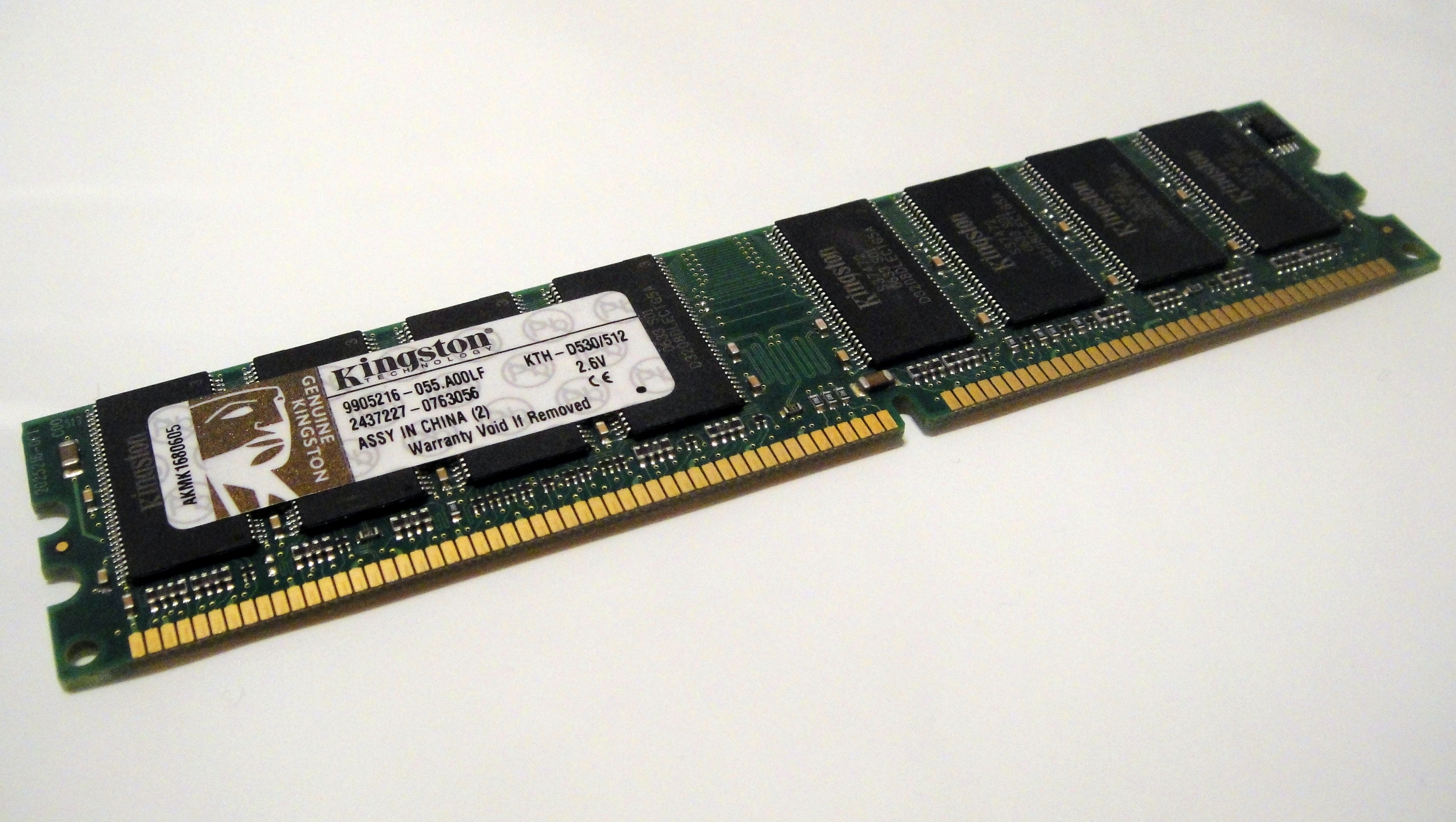
If you have been waiting for budget and midrange phones to get cheaper through 2026, the news is bad, and it has nothing to do with the phones themselves. The cost of the memory inside them is climbing. IDC analysts expect that to push smartphone prices up by roughly 6 to 8% this year, with the cheapest phones hit hardest (mobiletechworld.com, 2026).
The cause is the AI data center boom. Every chip of high-bandwidth memory that Samsung, SK Hynix, and Micron produce is being pulled toward server farms, leaving consumer electronics to scrap over what is left. TrendForce's Q3 2026 forecast confirms DRAM contract prices will grow 13 to 18% quarter on quarter, while NAND will be up another 10 to 15%. Mobile DRAM is up more than 70% since the start of last year, with NAND roughly doubling (91mobiles.com, 2026).
Why are midrange phones hit hardest?
On a £1,000 flagship, RAM and storage are a small slice of the bill of materials, so a memory price rise barely registers. On a £250 phone, memory is a much bigger share of the cost, so the same rise either pushes the price up or forces the maker to cut the spec. Omdia research shows memory costs for sub-$400 phones in Q1 2026 accounted for 59% of the total bill-of-materials cost, up from 32% in Q3 2025 (Android Authority, 2026).
Flagship makers like Samsung and Apple absorb the hit by trimming margins or shifting costs elsewhere, like raising cloud storage fees. Midrange and budget brands do not have that flexibility. When memory takes up nearly six in ten dollars of a phone's production cost, every extra gigabyte becomes a painful trade-off between price and usability (Android Authority, 2026).
The 4GB RAM regression
TrendForce warned that budget base models are heading back to 4GB of RAM, a standard the industry had comfortably left behind for 6GB and 8GB. OnePlus launched the OnePlus N6 in India at Rs 22,999 with 4GB of RAM, a price point that bought 8GB in 2025. OEMs' internal numbers reportedly account for an over 25% jump in DRAM cost per phone this year, and one fix on the table is shipping a lower memory configuration as the new base variant (91mobiles.com, 2026).
- DRAM contract prices: up 13-18% quarter on quarter in Q3 2026
- NAND contract prices: up another 10-15% quarter on quarter
- Mobile DRAM: up more than 70% since the start of 2025
- Average smartphone bill of materials: up around 25% in 2026 from memory alone
The problem is that 4GB is not enough for Android in 2026. Apps routinely hold more data in memory, and Android 16's background process management is more aggressive about killing apps in low-RAM devices. Users on 4GB phones will notice more app reloads, slower multitasking, and cameras that struggle when switching between modes. It is a downgrade you pay the same money for.
How did the memory market get here?
The memory crisis did not happen overnight. In 2024, the three major memory manufacturers (Samsung, SK Hynix, Micron) shifted production capacity toward high-bandwidth memory (HBM) for AI accelerators, which sells at three to four times the margin of standard mobile DRAM (TrendForce, 2026). By early 2026, HBM accounted for roughly 35% of total DRAM revenue while consuming less than 15% of wafer capacity, according to TrendForce estimates.
| Year | HBM share of DRAM revenue | Mobile DRAM price index | Avg phone RAM |
|---|---|---|---|
| 2024 | ~18% | 100 (baseline) | 7.2 GB |
| 2025 | ~28% | 142 | 7.8 GB |
| 2026 (est.) | ~35% | 240+ | 6.5 GB (declining) |
The result is a classic supply squeeze. Smartphone makers need the same memory chips they always have, but they are competing against data center buyers who pay premium prices and sign long-term supply agreements. Consumer devices end up at the back of the queue, paying more for whatever allocation remains.
Relief is not coming soon. TrendForce projects DRAM prices will begin stabilizing in Q1 2027, with modest declines possible by mid-2027 as new fab capacity comes online in China and Taiwan (TrendForce, 2026). SK Hynix and Samsung have both announced expansions to their HBM production lines, which should gradually free up standard DRAM allocation for consumer devices. The realistic timeline for meaningful price relief is 12 to 18 months.
What else is the memory crisis affecting?
Smartphones are not the only casualties. The same DRAM and NAND shortage is pushing laptop prices up by 17% year on year, with budget notebooks hardest affected. Graphics cards face similar pressure as GDDR6 and GDDR7 prices climb alongside mobile DRAM. Even the OLED monitor market, which had been falling toward mainstream pricing, is seeing price stabilization rather than further cuts as panel makers absorb higher memory component costs (laptop-prices-memory-crisis, 2026).
The pattern is consistent across consumer electronics: any device that relies on commodity DRAM or NAND is getting more expensive in 2026. The only segment largely immune is high-end AI hardware, which manufacturers are prioritizing because the margins are significantly higher.
How much more will phones cost in 2026?
The price impact varies by tier. Flagship phones priced above $800 will see modest increases of 2 to 4%, mostly hidden through higher storage upsell tiers rather than base price hikes. Midrange phones between $300 and $500 face steeper increases of 6 to 10%, with some models gaining 8GB RAM only at the $400-plus tier. Budget phones under $300 are where the pain is sharpest, with IDC projecting 8 to 12% price increases and widespread 4GB base configurations (IDC, 2026).
Some manufacturers are responding by spreading prices across more SKUs. Xiaomi's Redmi Note 15 lineup, for instance, now starts at 4GB/128GB but charges a significant premium to step up to 8GB. The strategy lets brands advertise a low starting price while quietly making the usable configuration more expensive.
What specs should you prioritize when buying?
In a market where memory is the tightest constraint, your buying checklist needs to lead with RAM and storage. Here is the minimum you should accept in 2026:
- RAM: 8GB minimum for any phone you plan to keep for two or more years. 6GB is acceptable only for light use. 4GB is a dealbreaker for most users.
- Storage: 128GB base is the floor. Apps, photos, and system files fill 64GB fast, and cloud storage does not compensate for slow local reads.
- Storage type: UFS 3.1 or higher. UFS 2.2 devices will feel noticeably slower as apps grow larger.
- RAM type: LPDDR5 or LPDDR5X. Older LPDDR4X chips are a sign the manufacturer cut costs elsewhere too.
The rule is simple: in 2026, check the RAM before you check almost anything else on a budget phone. RAM is the spec the memory squeeze is quietly attacking, and once you buy a phone with too little, there is no way to fix it later.
Should you buy now or wait?
Buy now if you need a phone and have found 8GB of RAM and decent update support at a price you are happy with. Waiting for a price that is forecast to rise is a bad trade. Wait only if your current phone genuinely still does the job, because the wait will not save you money this year. The one thing you should not do is stretch to a flagship to future-proof against price rises (mobiletechworld.com, 2026).
The one exception is if you are eyeing a phone that just launched at a bad spec-to-price ratio. Some 2026 models ship with 4GB at the same price that bought 8GB in 2025. In those cases, waiting two to three months for a competitor's response or a mid-cycle refresh can land you a better-specified device at the same price point.
The Nothing Phone (3a) at £299 for the 8GB/128GB model is the number to beat. At £299 you get 8GB of RAM, which is the floor you should accept for a phone you intend to keep three or four years. Anything cheaper in 2026 deserves a hard look at the RAM line before you spend, because the memory squeeze is exactly where corners will be cut quietly (mobiletechworld.com, 2026).
Other strong options include the Samsung Galaxy A56 at $399 with 8GB/128GB and the Pixel 8a at $349 with 8GB/128GB. Both offer clean Android software with long update commitments, which stretches the value of that 8GB RAM over four to five years of use.
In 2026, check the RAM before you check almost anything else on a budget phone. RAM is the spec the memory squeeze is quietly attacking.
— mobiletechworld.com
- mobiletechworld.com — Buy a phone now or wait? The 2026 memory-price squeeze
- 91mobiles.com — It's 2018 again: how memory prices are quietly rolling back years of smartphones' progress
- Android Authority — Increasing RAM prices may adversely impact sub-$400 phones
- TrendForce — Q3 2026 DRAM and NAND market forecast
- Laptop Prices Jump 17% as Memory Crisis Bites
- DDR6 Arrives Early: What It Means for Your Next Build
- The OLED Monitor Price Crash: Buy Now or Wait
- The 2026 Memory Crisis Explained
Why are smartphone prices going up in 2026?
DRAM prices have risen more than 70% since 2025 and NAND has roughly doubled, driven by AI data centers consuming most memory chip production. For budget phones, memory now accounts for 59% of the total bill-of-materials cost, pushing phone prices up 6-8%.
Is 4GB of RAM enough for a phone in 2026?
No. Android apps hold more data in memory than before, and Android 16 aggressively kills background processes on low-RAM devices. Expect frequent app reloads and slower multitasking. 8GB should be your minimum for a phone you plan to keep two or more years.
When will phone prices come back down?
TrendForce projects DRAM prices will begin stabilizing in Q1 2027, with modest declines possible by mid-2027 as new fab capacity comes online in China and Taiwan. The realistic timeline for meaningful price relief is 12 to 18 months.
Bottom line
Other strong options include the Samsung Galaxy A56 at $399 with 8GB/128GB and the Pixel 8a at $349 with 8GB/128GB. Both offer clean Android software with long update commitments, which stretches the value of that 8GB RAM over four to five years of use.
What we still don't know
This is a fast-moving story. We update the post as new facts land — and we'll flag it when we do.
Enjoyed this? Pay it forward
A sharp story is worth passing on. Share it with the people who read tech like it matters.