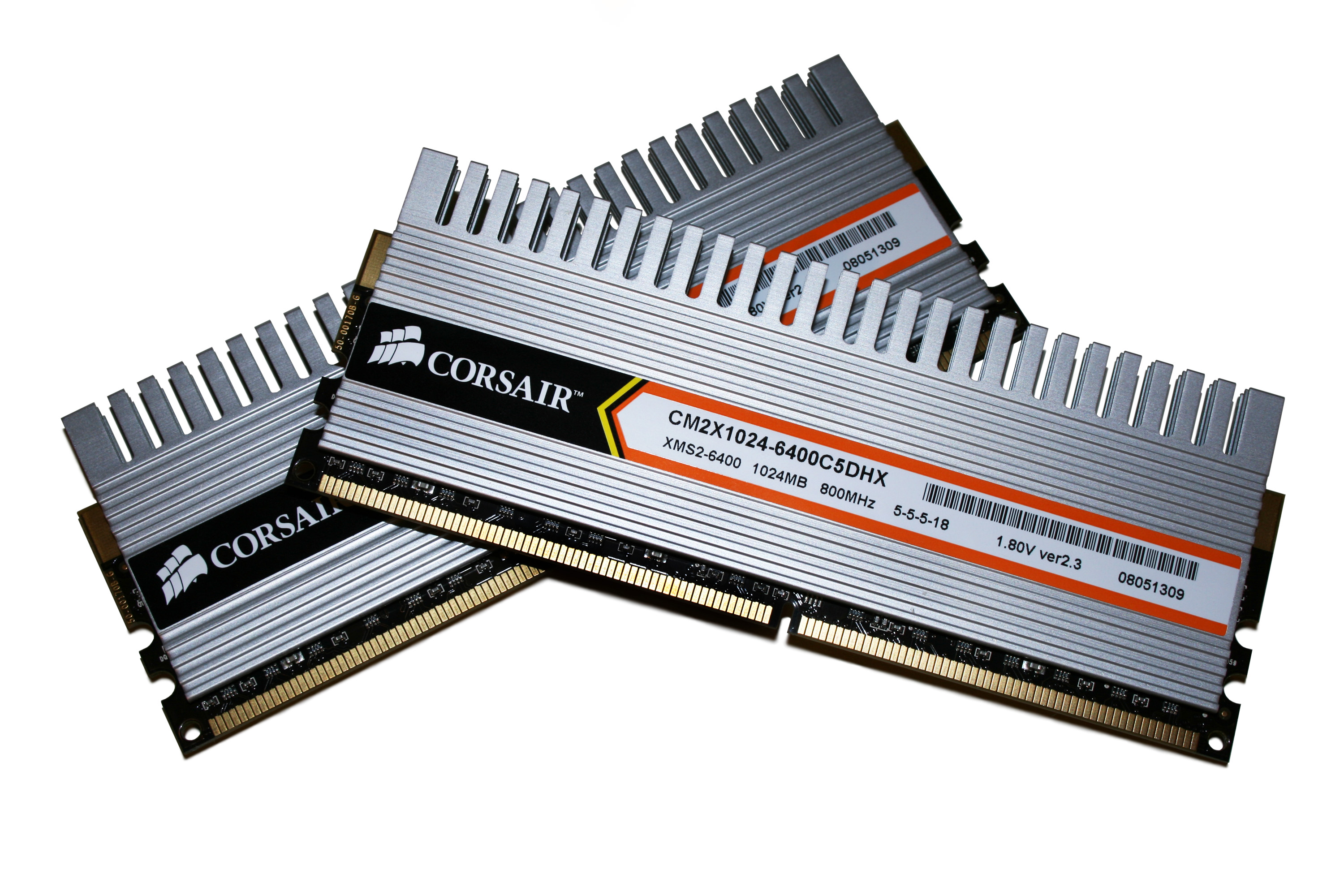
DDR6 is the next RAM standard, and it brings real improvements to the table. It starts at 8,800 MT/s and scales past 17,600, roughly doubling DDR5's peak transfer rate (JEDEC, 2025). But here is the catch: consumer modules will not reach store shelves before late 2027 at the earliest, and they will require an entirely new platform. If you need a PC today, DDR5-6000 CL30 is still the smart buy.
What makes DDR6 faster than DDR5?
The headline change is a four-by-24-bit sub-channel layout that replaces DDR5's two-by-32-bit pair. More channels mean more parallel data paths, which is exactly what modern multi-threaded CPUs and GPUs crave. DDR6 also drops operating voltage from 1.1V to about 1.0V, cutting power draw while pushing speeds higher (Evetech, 2026).
On-die ECC continues from DDR5, fixing bit errors as they happen at extreme frequencies. LPDDR6, the mobile sibling, already runs 10,667 to 14,400 MT/s and ships in phones first, which gives us an early look at how the technology behaves in the real world (JEDEC, 2025). For desktop users, though, the gains only arrive once Intel and AMD ship chips with DDR6 memory controllers. The DDR6 spec supports capacities up to 64GB per stick at launch, with 32GB modules arriving first.
| Spec | DDR5 (today) | DDR6 (2027+) |
|---|---|---|
| JEDEC base speed | 4,800 MT/s | 12,800 MT/s |
| Max peak speed | ~8,400 MT/s | 17,600 MT/s |
| Sub-channels | 2 x 32-bit | 4 x 24-bit |
| Voltage | 1.1V | ~1.0V |
| Form factor | DIMM / SODIMM | CAMM2 |
| On-die ECC | Yes | Yes (enhanced) |
Why is DDR6 delayed to 2027 or later?
The DDR6 spec is finalized. JEDEC ratified the LPDDR6 mobile version in July 2025, and desktop DDR6 followed in 2026 (JEDEC, 2025). The delay is not in the standard itself but in the ecosystem that has to support it. DDR6 needs a new CPU memory controller, a new motherboard socket, and a new module form factor. None of those exist yet in shipping products.
The global memory crisis makes things worse. SK Group Chairman Chey Tae-won said in March 2026 that the silicon wafer shortage will persist until 2030, with demand outpacing supply by more than 20% (Reuters, 2026). That shortage affects every new memory technology, and DDR6 is no exception. Samsung, Micron, and SK Hynix are still validating DDR6 with Intel and AMD, and server deployment is targeted for 2027 first.
The current shortage could continue until 2030, so we expect more than a 20% shortage of the wafers.
— Chey Tae-won, SK Group Chairman (Reuters, March 2026)
Even before the memory crisis, a 32GB DDR6 module was estimated to launch near $500, roughly five times the price of a comparable DDR5 kit (XDA Developers, 2026). With the current supply crunch pushing memory prices to record highs, that initial pricing floor could climb even higher. The 2028 to 2029 consumer window that was planned before the shortage now looks optimistic.
How much faster is DDR6 really?
On paper, DDR6 offers a 2.6x bandwidth uplift over DDR5's base spec. In practice, gaming gains will be far more modest. The difference between fast and slow DDR5 kits in current games is only 1 to 5 percent, and that gap will not explode overnight. DDR6's biggest wins show up in workloads that actually saturate memory bandwidth: large language model inference, 8K video editing, integrated graphics performance, and chiplet-based CPUs starved for parallel data paths (Evetech, 2026).
For a 1440p gaming build with a discrete GPU in 2028, the real-world difference between DDR5-6000 and DDR6-12800 will likely land between 5 and 12 percent, not the 2x marketing fantasy. The jump matters more for creators and AI workloads than for gamers running an RTX 5070. If you are editing 8K timelines or running local language models, the bandwidth helps. If you are gaming at 1440p with a discrete GPU, you will barely notice.
What is CAMM2, and why does DDR6 need it?
CAMM2 stands for Compression Attached Memory Module. It is a flat module that bolts parallel to the motherboard instead of standing upright like a traditional DIMM. JEDEC ratified the standard in 2024 as a joint effort with Dell, and it uses a Land Grid Array contact system with shorter signal routing to handle DDR6's extreme frequencies without interference (XDA Developers, 2026).
The familiar DIMM stick worked fine up to about 8,400 MT/s. Beyond that, the long traces on a standard DIMM cause signal degradation that no amount of error correction can fully fix. CAMM2 modules are roughly 57 percent thinner than SODIMMs and sit flush to the board, which keeps traces short and clean. DDR6 will ship as CAMM2, not DIMM, meaning your next RAM upgrade is a motherboard replacement. Laptops have already adopted CAMM2 for LPDDR5, so the form factor is proven in shipping products.
Can you drop DDR6 into a current DDR5 motherboard?
No. DDR6 is not backward compatible, and there is no adapter or BIOS update that changes that. It requires a new chipset, a CPU with a DDR6 memory controller, and a CAMM2-keyed slot. Your AM5 or LGA1851 board is locked to DDR5 for its entire life (Evetech, 2026). This is why "just wait for DDR6" is misleading advice. You are not waiting for a RAM kit. You are waiting for a complete platform rebuild.
Which chip will be first to support DDR6?
Intel's Nova Lake is the leading candidate for the first consumer chip with a DDR6 memory controller. It is expected on a new LGA1964 socket in late 2026 or 2027 (TechPowerUp, 2026). AMD's DDR6 platform has not been officially dated, though Zen 6 is the likely vehicle. Until one of these chips ships in volume, module makers will not mass-produce DDR6 sticks for a socket that does not exist yet.
Samsung has stated it will begin production samples in Q2 2026 and mass production by late 2026, but those are server-grade modules. Consumer availability follows server deployment by several months, which is why the earliest realistic desktop date is late 2027 (XDA Developers, 2026).
There is a wrinkle that makes the timeline even hazier. The efficiency paradox says that when chips get more memory-efficient, companies do not buy less memory. They use the freed-up capacity for longer context windows, bigger inference pipelines, and larger contracts with manufacturers. Google's TurboQuant compression algorithm and other KV cache optimization techniques are promising, but whether they lower consumer DRAM prices is an open question. The enterprise demand driving memory prices has nothing to do with gaming rigs, and it will not cool off just because algorithms get smarter about using what they already have (XDA Developers, 2026).
What should you buy for a 2026 build instead?
- DDR5-6000 CL30 for AMD builds (keeps Infinity Fabric 1:1 for lowest latency)
- DDR5-6400 CL32 or faster on Intel Core Ultra platforms
- 32GB, not 16, as the mainstream sweet spot in the current memory crunch
- A socket with upgrade runway, like AM5, for future CPU drops without a full rebuild
- Avoid paying premium for DDR5-8000+ on Ryzen, since the memory controller cannot run above ~6,200 in 1:1 mode
A strong DDR5 build today handles current workloads and stays useful for years. AM5 has confirmed support through 2027 and beyond, and LGA1851 will see at least one more CPU generation. Both stay on DDR5, so a build today is not a dead end.
Is it worth waiting for DDR6 then?
Wait only if you are planning a ground-up flagship build for late 2027 or 2028, do not need a working machine before then, and can absorb first-gen pricing that may land 40 to 60 percent above mature DDR5 kits. For everyone else, buy mature DDR5 now and treat DDR6 as a future rebuild, not a reason to hold off today. The DDR5 platform is not going anywhere. AM5 has confirmed support through 2027 and beyond, and LGA1851 will see at least one more CPU generation on the same memory standard.
There is always a next generation. DDR6 launches in 2027. DDR7 will be on roadmaps by 2030. If you wait for the perfect moment, you end up building nothing. The hardware that is ready when you need it is the right hardware. A DDR5 build today is not a dead end. It is a solid foundation that will serve you well for years.
Smartphone Memory Shortage: Why Your Next Phone Costs More
OLED Monitor Price Crash: What 2026 Holds
- XDA — DDR6 and flat CAMM2 sticks explainer
- Reuters — SK Group chairman on wafer shortage until 2030
- Evetech — should you wait for DDR6 or buy DDR5 now
- TechPowerUp — DDR6 consumer coverage
- Laptop Prices Jump 17% as the Memory Crisis Cracks
- Memory Crisis 2026: Why RAM and SSD Prices Doubled
- GPU Buying Guide 2026: Which Card Runs Your AI
- eGPU Revival: Thunderbolt 5 Changes the Game
- Solid-State Batteries Ship: What It Means for Laptops
Bottom line
There is always a next generation. DDR6 launches in 2027. DDR7 will be on roadmaps by 2030. If you wait for the perfect moment, you end up building nothing. The hardware that is ready when you need it is the right hardware. A DDR5 build today is not a dead end. It is a solid foundation that will serve you well for years.
What we still don't know
This is a fast-moving story. We update the post as new facts land — and we'll flag it when we do.
Enjoyed this? Pay it forward
A sharp story is worth passing on. Share it with the people who read tech like it matters.