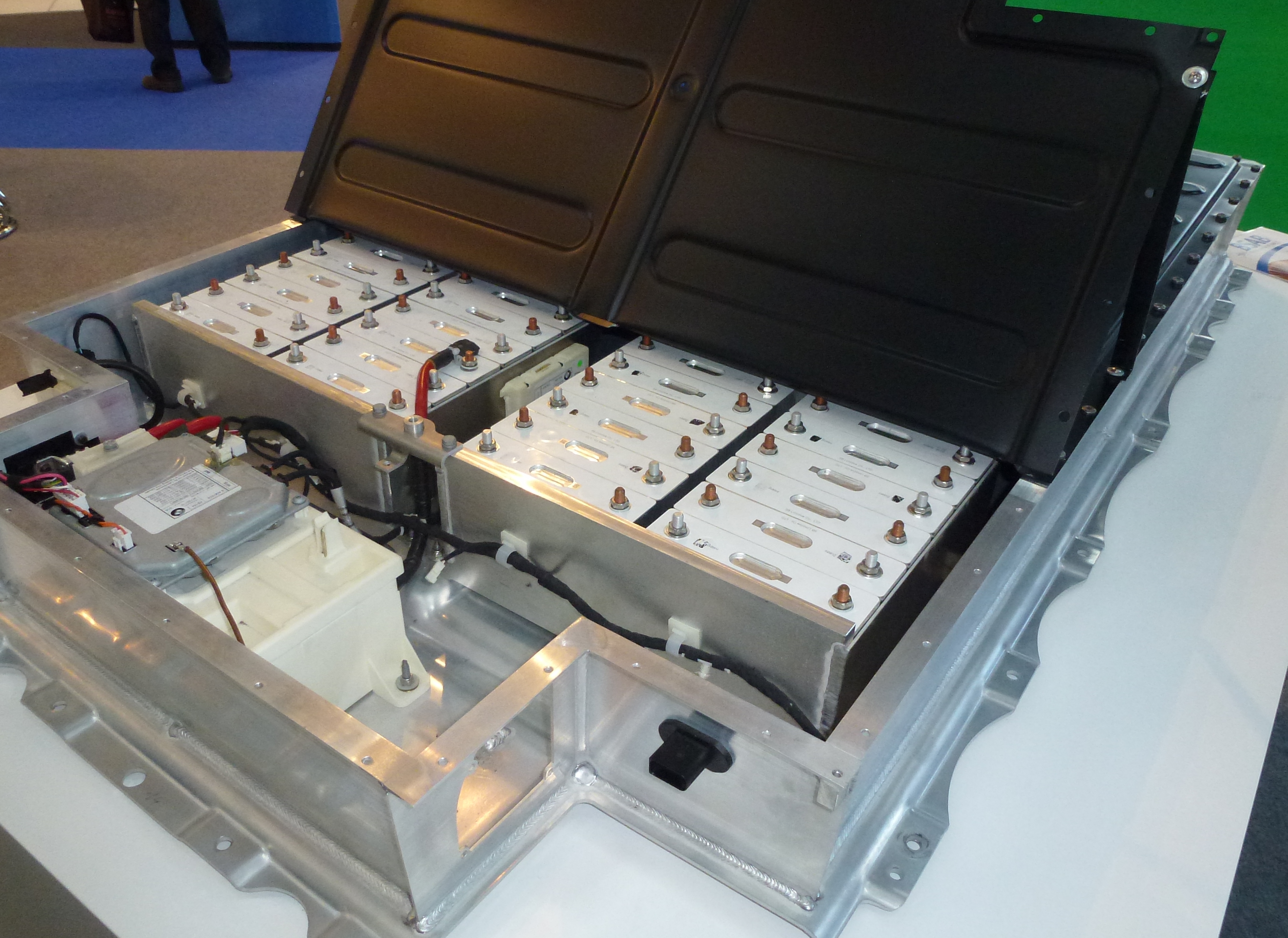
Solid-state batteries are finally shipping in real cars. Dongfeng Motor confirmed it will mass-produce and integrate its all-solid-state batteries in the second half of 2026, delivering an energy density of 350Wh/kg that pushes electric vehicles past 1,000 km of range on a single charge. This isn't a lab demo or a prototype on a shelf. It's a production-line commitment backed by a 0.2 GWh manufacturing plant already in operation (CarNewsChina, 2026).
Dongfeng isn't the only one. Across China, automakers and battery giants are racing to ship solid-state cells. SAIC has already launched the MG 4X with a semi-solid-state battery in China and is bringing it to Europe in 2026. BYD, CATL, Changan, and Chery all have aggressive timelines. The technology that has been called the "holy grail" of EV batteries for over a decade is crossing from promise to production.
What makes solid-state batteries different?
Conventional lithium-ion batteries use a liquid electrolyte to shuttle ions between electrodes. That liquid is flammable, limits how much energy you can pack into a cell, and performs poorly in extreme temperatures. Solid-state batteries replace that liquid with a solid electrolyte. The result is a cell that holds more energy per kilogram, charges faster, resists fire, and handles cold weather far better than its liquid-electrolyte cousins.
The performance numbers tell the story. Dongfeng's solid-state battery retained over 74% of its charge at minus 30 degrees Celsius during testing in Mohe, one of China's coldest cities. The pack is 30% lighter than traditional lithium-ion equivalents. And in safety trials, the cell remained operational even after being deformed by 50% and withstood oven exposure at 170 degrees Celsius with no smoke or fire (CarNewsChina, 2026).
Who is shipping what in 2026?
The solid-state race is wide open, with at least five major Chinese automakers deploying or testing the technology this year. SAIC moved first commercially, launching the MG 4X in China in May 2026 with a 53.9 kWh semi-solid-state battery from partner SAIC Qingtao, starting at 99,800 yuan, roughly $14,700. That price point matters. It puts solid-state tech in the hands of budget buyers, not just luxury early adopters.
FAW installed what it calls the "industry's first" lithium-rich manganese semi-solid-state battery, with a cell energy density exceeding 500 Wh/kg and a massive 142 kWh pack enabling over 1,000 km of CLTC range. Changan Automobile's "Golden Bell" all-solid-state battery hits 400 Wh/kg and claims over 1,500 km of range, with AI-powered diagnostics that improved safety by 70% (Electrek, 2026). Chery's "Battery Night" event in March 2026 raised the bar further. Its Rhino all-solid-state cell reaches 600 Wh/kg, the highest figure claimed by any major automaker, roughly triple the energy density of today's best production lithium-ion cells.
| Company | Type | Energy Density | Range Claim | Timeline |
|---|---|---|---|---|
| Dongfeng | All-solid-state, oxide-polymer | 350 Wh/kg | 1,000+ km | Mass production H2 2026 |
| SAIC | Semi-solid-state (MG4X) | — | — | On sale May 2026 |
| FAW | Semi-solid, Li-rich Mn | 500+ Wh/kg (cell) | 1,000+ km | Installed Feb 2026 |
| Changan | All-solid-state (Golden Bell) | 400 Wh/kg | 1,500+ km | Prototype testing Q3 2026 |
| Chery | All-solid-state (Rhino) | 600 Wh/kg (cell) | 1,500+ km | Testing 2026, mass 2027 |
| BYD | All-solid-state (sulfide) | — | — | Limited batches 2027 |
Chery also demonstrated a semi-solid "Rhino E Liquid" battery that can add 500 km of range in just 8 minutes at up to 1,200 kW of charging power. The Rhino lineup includes multiple tiers: a 400 Wh/kg solid-state "S-Series" for sedans, the semi-solid E Liquid for SUVs launching later in 2026, and the full 600 Wh/kg all-solid-state cell heading to the Exeed ES8 in 2027 (Electrek, 2026).
The 2027 ramp: when mass production begins
BYD plans to begin producing sulfide-based all-solid-state batteries in limited batches in 2027, then scale to full mass production by 2030. The first vehicles will likely carry the tech in BYD's premium sub-brands, Denza, Yangwang, and Feng Chang Bao, before it trickles down to mass-market models. BYD's chief scientist Lian Yubo has been clear: solid-state batteries aren't a replacement for liquid lithium-ion. They're a complement that expands the total addressable market for EVs. That's a critical distinction. Rather than displacing proven LFP and NMC chemistries, solid-state cells create a new tier of high-performance EVs that simply weren't possible before.
All-solid-state EV batteries have reached a critical stage, but there are still hurdles as the new tech moves to commercialization.
— Lian Yubo, BYD chief scientist (Electrek, 2026)
SAIC and partner Qingtao Energy are targeting 2027 for mass production of their "Guangqi" all-solid-state battery, which boasts energy density above 400 Wh/kg and a range exceeding 1,000 km. Changan's Golden Bell battery should reach vehicle validation by the end of Q3 2026, with full deployment in 2027. The pattern is consistent: semi-solid-state is shipping now, all-solid-state follows in 2027, and mass-market affordability arrives around 2030.
China's new solid-state law changes the rules
China's government isn't waiting for the industry to self-regulate. A new national standard took effect on July 1, 2026, establishing precise classification rules for solid-state batteries. To earn an official "all-solid-state" designation, a cell must pass a vacuum chamber test at 120 degrees Celsius for six hours and retain liquid electrolyte mass below 5% of total cell weight. This eliminates the vague "semi-solid-state" marketing labels that have blurred the line between incremental upgrades and genuine breakthroughs.
The regulation forces automakers to demonstrate actual factory readiness rather than relying on unverified lab claims. Dongfeng is already compliant, with its 0.2 GWh plant in production and plans to deploy 100 demonstration vehicles across Hubei province to gather real-world operational data. The new standard also clarifies timelines for the broader supply chain, from electrode manufacturers to pack integrators.
What about outside China?
The race isn't exclusively Chinese. US-based Factorial Energy launched the first commercial solid-state battery program in the country through a collaboration with Karma Automotive in early 2026. Factorial's Solstice platform achieves up to 450 Wh/kg, 80% higher than conventional lithium-ion batteries, with a claimed range exceeding 600 miles. The company has partnerships with Mercedes-Benz, Stellantis, Hyundai, and Kia. In Japan, Toyota continues to invest heavily in sulfide-based solid-state technology, targeting commercial EV deployment by the end of the decade.
Mercedes already proved the concept works. In September 2025, a modified EQS drove over 1,200 km on a single charge using Factorial's 106 Ah solid-state cells. Factorial's CEO told the New York Times that commercial solid-state batteries could appear in production EVs as early as 2027. Outside of Asia, that's one of the most concrete timelines on the table.
The cost problem nobody talks about
Here's the catch. Solid-state batteries remain expensive to manufacture. Industry analysts estimate the total equipment bill for a GWh-scale production line at around 59.2 billion yuan, roughly $8.7 billion, though localized supply chains are bringing that number down. Gotion High-Tech recently completed pilot verification using 100% locally manufactured machinery, eliminating reliance on international procurement entirely. That's a significant milestone in a market where geopolitical supply chain risk is a constant concern.
Dongfeng's oxide-polymer composite route was chosen specifically because it's compatible with existing lithium-ion production equipment, reducing the capital cost of switching over. The company formed the Hubei Solid-State Battery Industry Technology Innovation Consortium in May 2026, partnering with 18 academic and industrial institutions to share R&D costs and accelerate scale-up. That collaborative model could become the template for how the industry bridges the gap between pilot plants and mass production.
SAIC's semi-solid-state approach tells a similar story. By reducing liquid electrolyte to just 5% of the cell, SAIC gets most of the safety and density benefits at a production cost comparable to conventional LFP batteries. That's why the MG 4X launched under $15,000. The full all-solid-state cells from Dongfeng, BYD, and Chery won't reach that price point until at least 2030, when production volumes drive costs down the learning curve.
What this means for EV buyers right now
For most buyers, the near-term benefits are incremental but real. The MG 4X's semi-solid-state battery delivers meaningfully better cold-weather performance and safety than conventional LFP cells, at the same price. Chinese buyers can already purchase it. European buyers will get access in 2026. You don't need to wait for all-solid-state to see improvements. The semi-solid approach, which reduces liquid electrolyte to just 5% of the cell, gets most of the safety and density benefits without the manufacturing cost premium.
The bigger shifts come in 2027 and beyond. When all-solid-state cells hit premium models from BYD, Changan, and SAIC, expect ranges exceeding 1,500 km, charging speeds that add hundreds of kilometers in minutes, and batteries that are significantly lighter and safer. By 2030, if production scales as projected, solid-state tech should reach mass-market price points. The EV range anxiety era is ending.
The bottom line
Solid-state batteries have crossed the threshold from laboratory curiosity to production reality. Chinese automakers are leading the charge, with Dongfeng's H2 2026 mass production marking the first all-solid-state battery in a production vehicle. Semi-solid-state cells are already on sale in budget EVs for under $15,000. The next 18 months will determine which companies and chemistries win the race. If you're shopping for an EV, the battery under the floor is about to get a whole lot better.
- CarNewsChina — Dongfeng to mass-produce solid-state batteries in H2 2026
- CarNewsChina — China's new solid-state law takes effect
- Electrek — BYD plans all-solid-state batteries by 2027
- Electrek — Solid-state batteries with 800 miles of range
- The Lunar Economy: Mining the Moon Gets Serious
- Fusion's Break-Even Moment: Reality or Lab Fiction
- The Memory Crisis: Why Everything Is Getting Expensive
- Apple M5 Pro Battery Life Benchmarks Leak
When will solid-state batteries be in EVs?
Semi-solid-state is already shipping — the MG 4X launched in China for under $15,000. All-solid-state from Dongfeng begins mass production H2 2026, with mass-market affordability around 2030.
How far can an EV go with solid-state?
Dongfeng delivers 350Wh/kg for over 1,000 km range. Changan claims 1,500+ km. Chery's Rhino reaches 600Wh/kg — triple today's best lithium-ion cells.
Are solid-state batteries safer?
Yes. Solid electrolyte resists fire and performs better in extreme temps. Dongfeng's battery retained 74% charge at minus 30 degrees Celsius in safety trials.
Bottom line
Solid-state batteries have crossed the threshold from laboratory curiosity to production reality. Chinese automakers are leading the charge, with Dongfeng's H2 2026 mass production marking the first all-solid-state battery in a production vehicle. Semi-solid-state cells are already on sale in budget EVs for under $15,000. The next 18 months will determine which companies and chemistries win the race. If you're shopping for an EV, the battery under the floor is about to get a whole lot better.
What we still don't know
This is a fast-moving story. We update the post as new facts land — and we'll flag it when we do.
Enjoyed this? Pay it forward
A sharp story is worth passing on. Share it with the people who read tech like it matters.