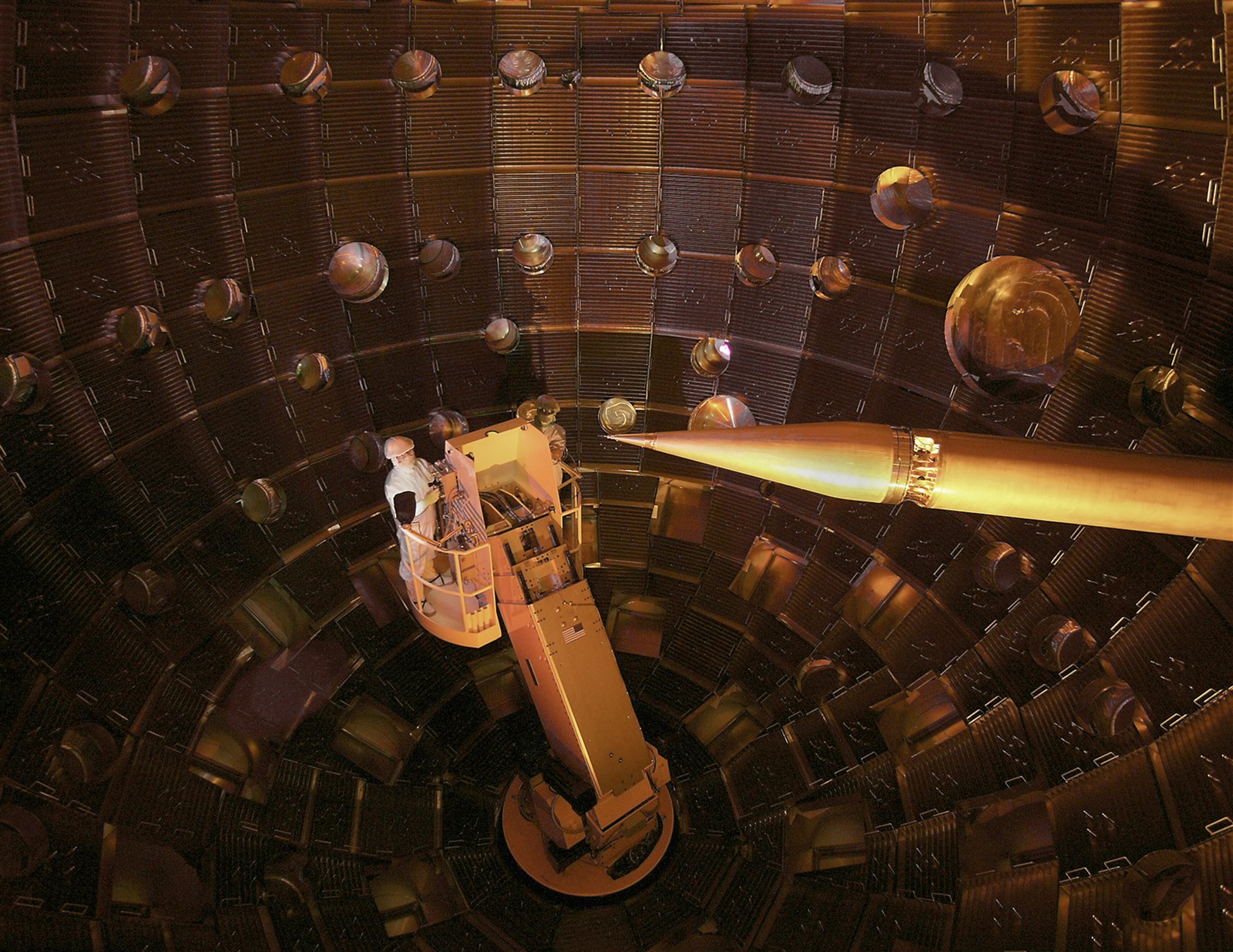
Fusion crossed a real scientific line on December 5, 2022. The National Ignition Facility fired 2.05 megajoules of laser energy at a tiny deuterium-tritium capsule and got 3.15 megajoules of fusion energy back. That is a gain of about 1.5, and it was the first time a controlled experiment in any lab produced more energy than it consumed (DOE, 2022).
The physics is real. Peer-reviewed papers confirmed it in Physical Review E in early 2024, and follow-up shots pushed the record gain near 1.9 (Physical Review E, 2024). But there is a gap between that number and the one on your electricity bill, and that gap is where most of the hype lives. Let's break down what actually happened, what it means, and what it does not.
Did fusion really break even in 2022?
Yes, on the definition that matters to physicists. Scientific breakeven means the fusion output exceeded the laser energy that drove the fuel. On that December day, the team measured 3.15 MJ out against 2.05 MJ in, a gain of 1.5 plus or minus 0.1 (Pak et al., Physical Review E, 2024). This was not a fluke. It was the payoff of decades of opto-mechanical refinements that reduced coast time and boosted implosion velocity.
Why is break-even not a power plant?
Because the yardstick changed. Reaching a gain of 1.5 for the laser pulse is not the same as feeding a grid. The lasers at Livermore still need far more electricity from the wall than the fusion returns. The wall-plug efficiency of the NIF laser system sits below 1 percent, meaning it takes roughly 300 MJ of electrical input to fire the laser once. The fusion output of 3.15 MJ is impressive in the lab, but it covers a tiny fraction of what the facility consumed (DOE, 2022).
For a power plant, you need wall-plug gain well above 10, ideally closer to 30 or 40. That means fusion output must eventually dwarf the entire electrical bill of the plant, not just the laser pulse. The step from "fusion beats the laser" to "fusion beats the power bill" is still massive.
| Metric | NIF value | Power plant target |
|---|---|---|
| Fusion energy out | 3.15 MJ | Hundreds of GJ per day |
| Laser/plasma energy in | 2.05 MJ | Continuous operation |
| Target gain (Q) | ~1.5 | Q ≥ 10 for net electricity |
| Wall-plug gain | Below 1 | ≥ 30 for commercial viability |
Was the 2022 result a one-and-done event?
No. The team repeated and improved on the result, with follow-up shots producing gains approaching 1.9, as published in Physical Review E in 2024 (Pak et al., 2024). These results confirm the physics is stable, not luck. But NIF primarily serves the National Nuclear Security Administration's stockpile stewardship mission, not the energy grid. The facility runs a limited number of shots per year, far too slow to matter for power generation.
- 2.05 MJ of laser drove a diamond capsule in December 2022
- It released 3.15 MJ from a deuterium-tritium core
- Target gain passed 1.0, a scientific first
- Follow-up shots pushed gain near 1.9
- NIF's wall-plug efficiency remains below 1 percent
How does NIF compare to the magnetic-reactor crowd?
It is a completely different path. NIF uses inertial confinement, a millisecond flash of laser light that crushes a fuel pellet. Tokamaks like ITER use magnetic confinement to hold superheated plasma for extended periods, sometimes for minutes at a time. Each reports its own gain metric, and comparing them directly is like comparing a spark plug to a furnace. The fusion community argues over which statistic is honest because the definitions matter enormously.
The Joint European Torus, or JET, held the magnetic fusion record for decades. In 1997 it produced 16 MW of fusion power from 24 MW of heating input, a Q of 0.67 (JET/EUROfusion, 1997). In its final operational campaign in October 2023, JET set a new energy record of 69.29 MJ over 6 seconds using deuterium-tritium fuel (EUROfusion, 2024). That is a different kind of milestone: sustained energy, not a single laser flash.
What about China's EAST and the race for long pulses?
China's Experimental Advanced Superconducting Tokamak, EAST, is pushing the boundary on plasma duration, a different axis of the fusion challenge. In January 2025, EAST sustained plasma for 1,066 seconds, shattering its own previous world record and proving that sustained operation is physically achievable (Chinese Academy of Sciences, 2025). In April 2023 it achieved 403 seconds of steady-state H-mode plasma, a key milestone for reactor-relevant operation (EAST team, 2023). Duration matters because a power plant needs to run continuously, not just flash once.
When will ITER tell us if fusion can power a city?
ITER, the international megaproject in southern France, is designed to produce 500 MW of fusion power from 50 MW of heating input, a gain of 10 (ITER Organization, 2024). That would be the first time any device achieves net energy across the plasma, not just in a laser pulse. ITER's 34 member nations represent over half the world's population and 73 percent of global GDP.
The timeline has slipped, though. In November 2024, the ITER Council approved a new baseline pushing full magnetic energy to 2036 and deuterium-tritium operations to 2039, delays of three and four years respectively from the original schedule (ITER Organization, 2025). The first plasma is now expected around 2034. ITER will not generate electricity, but it will prove whether the physics works at reactor scale.
| Facility | Record | Year |
|---|---|---|
| NIF (inertial) | Gain ~1.5, 3.15 MJ yield | 2022 |
| JET (magnetic) | 69.29 MJ over 6 seconds | 2023 |
| EAST (magnetic) | 1,066-second plasma pulse | 2025 |
| ITER (magnetic) | Target: Q=10, 500 MW | 2039 (planned) |
Is the fusion moment real or just hype?
Real, with a strict boundary. The break-even achievement is genuine, peer-reviewed, and reproducible. It changed the scientific consensus that a burning plasma is reachable. The hype arrives when people quote that milestone as if it were a working reactor. "Science cracked, power plant not yet" is the honest version.
Private investment is pouring in, though. The Fusion Industry Association counted over 45 private fusion companies worldwide by 2026, with cumulative funding exceeding $6 billion (FIA, 2026). Companies like Commonwealth Fusion Systems, Helion Energy, and TAE Technologies are building their own devices. The U.S. DOE announced Genesis Mission awards in July 2026 to support AI-driven fusion research (DOE, 2026). The money is real, even if the grid connection is not yet.
What would need to change for fusion to light your home?
Three things. First, wall-plug gain needs to climb from below 1 to above 30, meaning the plant must produce 30 times more electrical energy than it draws from the grid. Second, the system must run continuously, not in single shots. NIF fires a few times per week at best; a power plant needs 24/7 operation. Third, the fuel cycle must close. Deuterium is abundant in seawater, but tritium is rare and must be bred from lithium inside the reactor itself.
None of those problems are solved yet. They are engineering challenges rather than physics impossibilities, which is exactly why scientists remain genuinely optimistic. The science says yes. The engineering says not yet. That distinction is the whole story of fusion in one sentence.
Scientific break-even was a necessary and beautiful proof. It is just not the same number as the one that will light your city, and that difference matters.
— Maya Chen
Key takeaways
- NIF achieved scientific breakeven with a gain of 1.5 in December 2022, confirmed in peer-reviewed journals in 2024
- Wall-plug gain remains below 1, far from the 30+ needed for commercial power
- JET set a 69.29 MJ energy record in 2023; EAST sustained plasma for 1,066 seconds in 2025
- ITER targets Q=10 by 2039 but has slipped three to four years from its original schedule
- Private fusion investment has topped $6 billion across 45+ companies globally
- The physics works. The engineering for grid-scale power is still ahead.
- DOE — National Ignition Facility fusion ignition announcement, 2022
- Physical Review E — Observations of the first laboratory fusion experiment to exceed target gain of unity, 2024
- EUROfusion — JET's final fusion energy record, 69.29 MJ
- EAST — 1,066-second plasma duration record, 2025
- ITER Organization — Project timeline and baseline update
- Fusion Industry Association — 2026 Global Fusion Industry Report
- APS Physics — Nuclear-Fusion Reaction Beats Breakeven, viewpoint article
- The Memory Crisis driving up chip prices
- GPU Buying Guide for 2026
- Starship's orbital refueling test, the results are in
Bottom line
None of those problems are solved yet. They are engineering challenges rather than physics impossibilities, which is exactly why scientists remain genuinely optimistic. The science says yes. The engineering says not yet. That distinction is the whole story of fusion in one sentence.
What we still don't know
This is a fast-moving story. We update the post as new facts land — and we'll flag it when we do.
Enjoyed this? Pay it forward
A sharp story is worth passing on. Share it with the people who read tech like it matters.