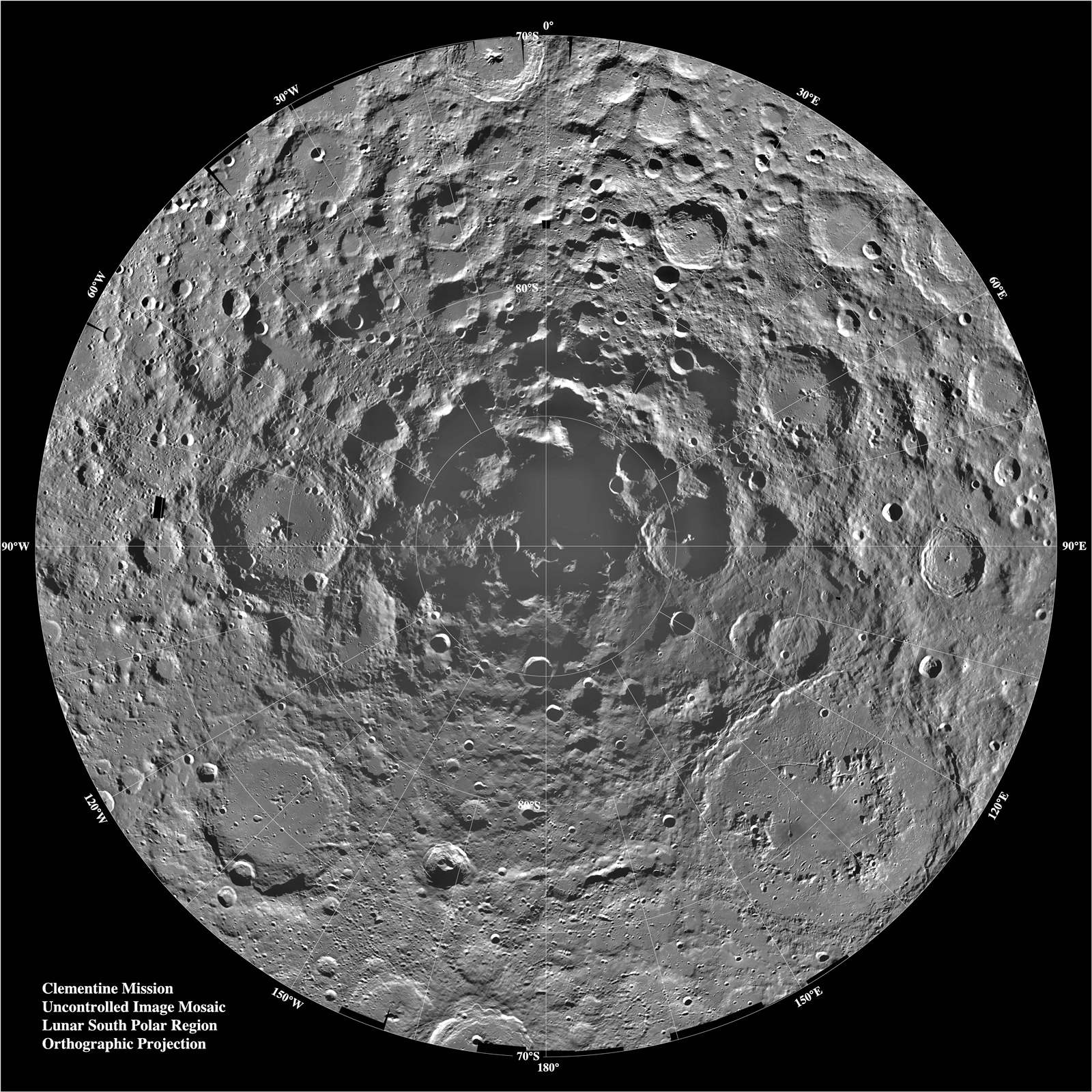
The lunar economy moved from a TED-talk pipe dream to a funded roadmap in 2026, and the resource at the center of it all is water. NASA's Moon Base plan, unveiled in March 2026, ties a permanent outpost, repeated landers and in-situ resource use to turning polar ice into fuel, oxygen and drinking water (NASA, 2026). That shift from science mission to infrastructure build-out is what separates this decade from every other one.
What is the industrial plan to mine the Moon?
It's a land-then-prospect-then-use sequence, and the funding is already flowing. The Commercial Lunar Payload Services program has 17 delivery contracts worth up to $2.6 billion through November 2028, with 13 eligible American companies competing to land more than 60 NASA payloads on the Moon (NASA, 2026). That's not a feasibility study. It's a procurement pipeline with real contracts and firm-fixed-price task orders.
The White House executive order signed in December 2025 calls for a permanent lunar outpost by 2030 (White House, 2025). NASA's Moon Base plan maps three phases: robotic technology demonstrations first, then crewed missions, then sustained operations with rovers, habitats and power systems near the south pole (NASA, 2026). If the first two phases work, mining transitions from government-funded exploration to commercial commodity sales.
| Milestone | Target | Source |
|---|---|---|
| Executive order setting 2030 outpost | Dec 2025 | White House |
| Moon Base plan announced | Mar 2026 | NASA |
| CLPS contracts awarded | 17 contracts / $2.6B | NASA |
| Lunar terrain vehicle (LTV) contracted | $439M combined | NASA, May 2026 |
| Moon Base I launch | Fall 2026 | NASA |
| Moonfall drone survey | 2028 | NASA/JPL |
Why is water the most important resource on the Moon?
Because water splits into hydrogen and oxygen, which are propellant and air. If you can pull hydrogen from lunar ice, spacecraft can refuel at the Moon and go deeper instead of carrying every drop of fuel from Earth. That single prize is what makes an economy out there more than a curiosity.
The lunar south pole holds permanently shadowed craters where temperatures stay cold enough to trap water ice in the regolith. NASA's Lunar Reconnaissance Orbiter first confirmed hydrogen concentrations there in 2009, and subsequent missions have mapped ice deposits across at least six craters (NASA, 2009). Extracting that ice through drilling, heating or microwave processing is the technical hurdle that ISRU aims to clear.
- South pole craters carry water ice in permanent shadow
- Electrolysis splits that ice into oxygen and hydrogen
- Hydrogen becomes rocket propellant for the return leg
- Oxygen becomes breathable air and oxidizer
- Leftover water supports drinking and hygiene for crew
The most concrete ISRU technology being tested right now is Interlune, a Seattle startup that received a $6.9 million SBIR Phase III contract from NASA in May 2026 to build a mass spectrometer that can extract and measure solar wind gases trapped in lunar regolith (NASA, 2026). The instrument is adapted from NASA's MSOLO technology, which already demonstrated its hardware during the Intuitive Machines 2 mission to the south pole in 2025.
Interlune's device will collect regolith samples, sort particles by size, and measure helium-3 and hydrogen concentrations. If it works, it gives future prospectors a tool to map not just water ice but also volatile gases that could eventually power fusion reactors. The contract represents the first real money flowing toward commercial lunar resource prospecting, not just delivery logistics.
Who are the companies actually being paid now?
Quietly, the check writers are real. NASA's Moon Base work is falling to private landers and rovers through the CLPS program. In May 2026, the agency awarded Astrolab $219 million and Lunar Outpost $220 million to build crewed and uncrewed lunar terrain vehicles capable of reaching the south pole by 2028 (NASA, 2026). Blue Origin got $188 million, with an option period worth up to $280.4 million, for two cargo lander task orders using its Blue Moon Mark 1 Endurance vehicle.
Astrolab's Crewed Lunar Vehicle weighs about 2,000 pounds and can hit 6 mph on level terrain. Lunar Outpost's Pegasus is lighter, operates for up to a year, and can drive manually, autonomously or via teleoperation at more than 9 mph. Both rovers will scout terrain, move materials and pre-stage resources ahead of the first astronaut landings.
If you can turn lunar water into fuel at scale, you are no longer in the launch business. You own the fuel station near the Moon.
— Maya Chen
The Moon Base itself needs more than rovers. NASA's program page outlines that by 2036 the outpost should support four to five surface habitats, nuclear and solar power sources, communications and navigation infrastructure, landing systems, sample return capability and ISRU equipment including 3D manufacturing (NASA, 2026). Getting even the first two items operational by 2030 would be a genuine breakthrough.
What has to happen for the Moon economy to actually form?
Three things, in order. First, a prospector must confirm accessible water ice and map its depth. Second, an orbital refueling test must work so returning cargo stops being a fantasy. Third, a buyer must appear for the first commodity, likely government missions paying for oxygen and water. Watch those three, not the glossy renders.
The Beyond Earth Institute has pushed NASA to formally declare commercial lunar development as a co-equal mission objective alongside science and national security. In a 2026 opinion piece, they argued that NASA should structure lunar surface contracts to let private operators sell services to non-NASA customers and convene a Lunar Economic Development working group chaired by the Department of Commerce (SpaceNews, 2026). Without that shift, the Moon Base risks becoming another government-dependent procurement program.
What is the strongest argument against the hype?
It produces nothing yet. Every metric on the board is a plan or a prototype. No company has pumped a single liter of propellant on the Moon. The first Moon Base mission won't launch until fall 2026, and it's a technology demonstration, not a mining operation. Orbital refueling for Starship depends on tests that haven't flown yet.
SpaceNews pointed out that Isaacman's lunar plan gives private actors little consideration beyond serving as potential vendors. The plan reads like a traditional NASA procurement program, not a commercial ecosystem. Until contracts allow private operators to sell to non-NASA buyers, the 'economy' label is premature.
So is this the Moon Rush or a moon of talk?
It's a genuine early innings, not a gold rush yet. The policy, the contracts and the landers are real, which is more than any previous decade could say. NASA has $2.6 billion in delivery contracts, $439 million in rover deals, and $6.9 million flowing to actual resource-prospecting instruments.
But the mineral flow is zero, and the first real payoff is at least half a decade away. Call it the funded gold-rush prelude: real money, real plans, no ore. The next two years will tell whether Moon Base I lands successfully, whether Pegasus and the CLV-1 rovers actually drive on the surface, and whether anyone builds a business case beyond government contracts.
Key takeaways
- CLPS has 17 contracts worth up to $2.6 billion for commercial lunar delivery through 2028
- NASA awarded $439 million for two lunar terrain vehicles in May 2026
- Interlune received $6.9 million to build the first commercial lunar resource prospector
- Moon Base I launches fall 2026 as a technology demonstration, not a mining operation
- The economy remains government-funded until private operators can sell services to non-NASA customers
Sources and further reading
- NASA — Moon Base rovers, landers, and missions update (May 2026)
- NASA — Commercial Lunar Payload Services overview
- NASA — Lunar resource-seeking technologies (Interlune contract)
- NASA — Moon Base program
- SpaceNews — A lunar base or a lunar economy?
- The GPU buying guide for 2026
- Starship's orbital refueling test is a first step
- AI agents hit the payroll
- Solid-state batteries are finally shipping
Bottom line
But the mineral flow is zero, and the first real payoff is at least half a decade away. Call it the funded gold-rush prelude: real money, real plans, no ore. The next two years will tell whether Moon Base I lands successfully, whether Pegasus and the CLV-1 rovers actually drive on the surface, and whether anyone builds a business case beyond government contracts.
What we still don't know
This is a fast-moving story. We update the post as new facts land — and we'll flag it when we do.
Enjoyed this? Pay it forward
A sharp story is worth passing on. Share it with the people who read tech like it matters.