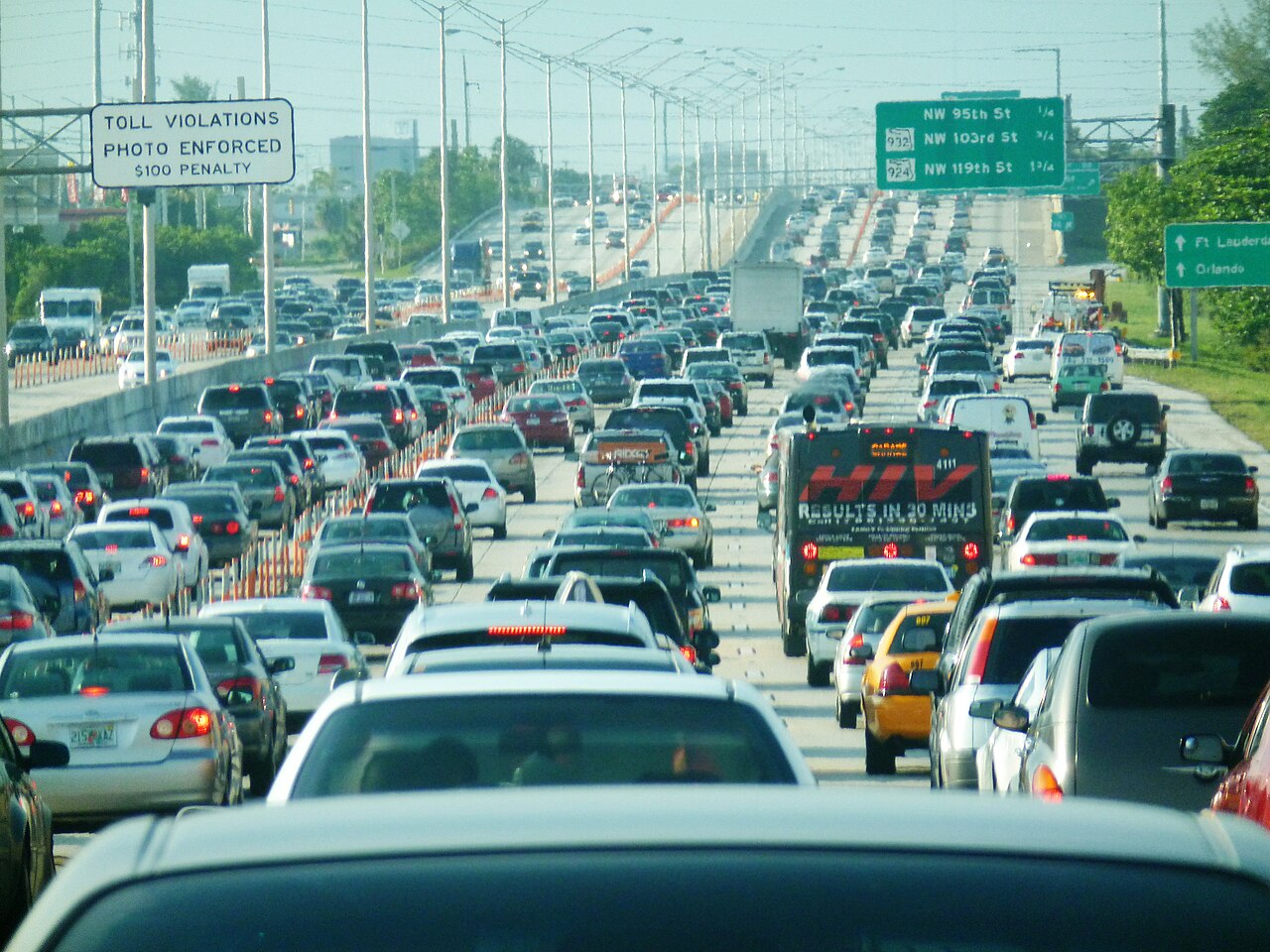
The United Nations' current projection is that world population peaks around 10.3 billion people in the mid-2080s and then declines — a population that is growing toward a peak, not doubling (UN World Population Prospects, 2024). Still, 'what if population doubled?' is one of the most tested hypotheticals in public-health science, and its urban version has a surprisingly crisp answer: in cities, a doubling of people does not simply double the noise — it can push exposure and its disease burden toward decade-sized jumps, because the curve is not linear.
Why a doubling matters to your ears
Noise is a proxy for density. In each city, dB exposure scales with vehicle counts, flight paths, construction hours, and the sheer number of human activities. Population doubling does not double the noise floor — it roughly doubles the number of events, and with them the share of the population exposed above the WHO's community-noise guideline of 45 dB Lnight (WHO 2018 guidelines). Because the health effects of noise are not captured by the mean, they concentrate in the exposed group, and the group is exactly the one whose size doubles.
The health bill, per doubling
- 73,000 premature deaths annually in European cities are linked to chronic environmental noise — more than double the road-crash toll.
- Noise above ~53 dB Lden is associated with cardiovascular disease, ischemic heart disease being the largest share.
- Disturbed sleep sets off the cascade: cortisol spikes and metabolic changes, which is how nocturnal noise correlates with diabetes.
- Children in noisy classrooms learn slower; the developmental burden is why WHO tracks school exposure separately.
| Measure | Baseline (European cities) | At a 2x city |
|---|---|---|
| People exposed > 45 dB Lden | 70-80% (WHO Europe estimate) | Rising toward 90%+ in many cores |
| Premature deaths from traffic noise | 73,000/yr (WHO Europe) | Rises sharply |
| Cardiovascular disease burden | 49,000 premature deaths/yr | Large increase |
| Type 2 diabetes over long exposure | linked, not yet proven causal | Grows monotonically |
The exact multiplier is contested, but the direction is not. A doubling in local population density reliably increases the share of residents chronically exposed to harmful daytime noise — and that share, not the mean, is what the health models operate on.
But we're projected to peak, not double
The UN projection is the honest context: the 10.3-billion peak arrives mid-century, then global population is expected to decline through 2100. The doubling thought-experiment is a 'what if' — a stress test for cities, not a prediction. It is most useful in mid-size cities, where the currently-low traffic noise burden would grow fastest under a population surge.
What actually gets noisier with more people
Population growth does not raise every sound equally. It adds the sounds that travel: more vehicles on the same streets, more planes on the same flight paths, more construction crews working the same night windows. What barely changes is the background identity of quiet suburbs — unless the growth is written into them. So the doubling scenario is really a traffic scenario, and the loudest contribution by far is the car idling at every block, followed by highway-compatible engines, diesel trucks on arterials, and the freight trains that cut through residential districts.
That is why noise modeling is stubbornly different from air-quality modeling. A doubled population is expected to raise the number of exposed people nonlinearly because the sounds that dominate the loudest hours of the night are vehicular, not human. A human voice carries a few meters; a diesel engine at 40 kph is audible for a full city block, and its decibel level changes only slightly with the people around it.
The threshold where the health evidence turns
The WHO's 2018 evidence review sets the guideline value for community noise at 53 dB Lden (the day-evening-night weighted average) for protecting against cardiovascular risk, and 45 dB Lnight for protecting sleep. Above those thresholds the relative risk slopes upward steeply: the WHO itself estimates that more than a hundred million European residents are exposed to night-time levels above 45 dB (WHO, 2018).
The practical consequence of those thresholds is that a few dB of population-driven increase can move a community from below a cutoff to above it — and the health models are cutoff-driven. That is nonlinearity in miniature: the same added truck sitting in a district below the line does very little, while an identical truck in a district just over the line changes the statistics for an entire neighborhood.
What sound-proofing keeps up
- Low-noise road surfaces built to the WHO city-of-tomorrow standards.
- Residential acoustic retrofits: windows, balconies, and building positioning that keep the 45 dB target.
- Electric-first fleets, which remove the biggest noise generator (engines) from the street, worth about 3 dB in the core.
- Night-time traffic quotas on key arterial streets, applying noise law as environmental policy.
Every one of these is cheaper per resident than the medical bill they avoid. European cities that adopted low-noise asphalt and night truck bans report measured street-level reductions of 1.5-3 dB, and the EU tracks environmental noise as a factor in roughly a hundred million people affected across member states (EEA, 2025). The scale of the doubling thought-experiment is exactly the scale at which these interventions stop being optional.
'Noise is not an obscure niche; it is one of the cleanest, cheapest signals in public health. Fix the decibels and you fix a measurable piece of the disease burden' — WHO, environmental noise guidelines for the European Region (2018)
The arithmetic at the extreme
For the 'what if cities doubled' scenario: doubling the population while the street layout stays the same raises the equivalent noise level by about 3 dB — which is a doubling of sound energy — but because the share of people above the WHO threshold climbs, exposure rises faster than population does. That is the health-relevant part: the spike concentrates at the top of the exposure distribution, which is exactly the pattern global disease-burden extrapolations point to.
A concrete way to feel the lever: a 3 dB reduction corresponds to removing roughly half the sound energy from a street. Cities that have built electric bus fleets, low-noise asphalt, and kerbside barriers together report that combination is worth ~6-10 dB line-noise reduction at the façades of buildings — enough to drop a community from 'severely disturbed sleep' toward the WHO's 45 dB Lnight target. The interventions that paper over a doubling are the same ones that make a city quieter even when the population is flat.
The honest limits of the comparison
A doubling of people concentrated in a single corridor behaves differently from the same doubling distributed across the country, and the UN's own growth path for cities is already densifying the ones that exist. The thought-experiment 'city' in the tables is a stylization: real population growth comes with new housing stock, newer fleets, different commuting habits — all of which can produce noise reductions even as population grows. The right read is not 'a doubled city is twice as loud,' it is 'noise is the health outcome that follows density most directly, and it is the one we are best equipped to manage early.'
Bottom line
Population doubling never happens in the central UN projection — the world peaks and then contracts. But as a lens it exposes the deepest public-health finding of the last decade in noise: the top of the exposure distribution is the number that matters. And the small, cheap mitigation steps — surfaces, barriers, electric fleets, night quotas — are worth taking whether the city doubles or not.
Will world population actually double?
No. Under the UN's 2024 revision it peaks at about 10.3 billion (mid-2080s) and then declines to 2100. Few viable projections come close to a doubling.
Is a doubling of people a doubling of noise?
No. Sound energy roughly doubles (+3 dB), but the share of highly-exposed people rises faster — and that share is the health-relevant part.
What are the main health effects of chronic noise?
Cardiovascular disease, ischemic heart disease, sleep disturbance, and cognitive effects in children; the WHO links about 73,000 premature deaths per year in European cities to traffic noise.
What actually helps reduce urban noise?
Quiet road surfaces, acoustic barriers, fleet electrification (the engine is the main noise source), building acoustic windows, and night-time traffic curfews.
- WHO guidelines for community noise
- WHO environmental noise guidelines for the WHO 2018
- EU: Environmental Noise Directive figures
- NASA finds a honeycomb landscape on Mars
- Geoglyphs hidden beneath the Amazon canopy
- The smart-city building boom and its hidden costs
Bottom line
Population doubling never happens in the central UN projection — the world peaks and then contracts. But as a lens it exposes the deepest public-health finding of the last decade in noise: the top of the exposure distribution is the number that matters. And the small, cheap mitigation steps — surfaces, barriers, electric fleets, night quotas — are worth taking whether the city doubles or not.
What we still don't know
This is a fast-moving story. We update the post as new facts land — and we'll flag it when we do.
Enjoyed this? Pay it forward
A sharp story is worth passing on. Share it with the people who read tech like it matters.